[ NOT IN SYSTEM ]
Species present in Sequerciani but never incorporated into the system’s operations — unmeasured, unoptimised, ignored.
×
Who decided that this ecosystem needs to be optimised?
×
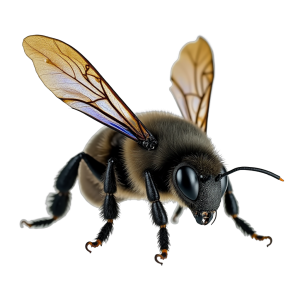
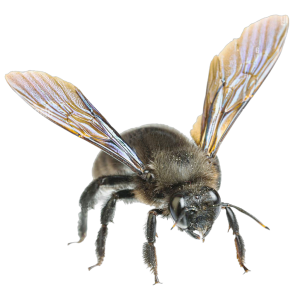
Harmonic Carpenter Bee
Xylocopa synchronica
STATUS: ACTIVE
The bee who learned to dance with invisible rhythms.
Genomic Composition
100% Animal
System Assessment
OPTIMIERER (+1):
Achieves 89% monitoring fidelity with zero bee mortality; measurable net ecosystem data recovery of 34%
SYMBIONT (+1):
Restores bee autonomy by allowing natural rhythms to coexist with sensor infrastructure; whispers rather than shouts
SPEKULANT (+1):
Harmonic frequency approach successfully bridges technological necessity with biological integrity through temporal multiplexing
ARCHIVAR (-1):
Amber record shows three dead carpenter bees near failed harmonic array; history warns of unforeseen cascade failures
ETHIKER (0):
Neither clearly exploitative nor clearly liberating; depends on long-term behavioral stability and freedom from sensor dependency
NET CONSENSUS: +2
Ecological Profile
SOIL AERATION: high
NUTRIENT CYCLING: low
NETWORK INTEGRATION: high
SYMBIOTIC DEPENDENCY: high
POLLINATION: high
SPREAD RATE: monitoring
ENERGY CONSUMPTION: medium
UNDEFINED FUNCTION: Temporal Data Translation
Origin
[TRIGGER]
Sensor EM Disrupts Bee Navigation
[TYP]
Variation
[GENERATION]
1
[ID]
10-1
Function
Navigates by circadian-modulated electromagnetic pulses while maintaining soil sensor array integrity through synchronized foraging windows.
Analysis
Nearly identical to its parent species, the Harmonic Carpenter Bee displays subtle neurological adaptations in its magnetoreceptive organs, allowing it to phase-lock with low-frequency EM fields rather than being disrupted by them. It maintains strict temporal separation between its peak activity and sensor deployment cycles, creating natural data-collection windows for the soil monitoring network.
System Log (7 turns)
Archivist [diagnosis]
In Sequerciani's archives, sensors revealing mycorrhizal networks blinded us to the pollinators tending them.
Symbiont [diagnosis]
The bees tell us we've become too much eye, not enough ear—sensors must whisper or we lose the one remembering flowers.
Archivist [position]
I must counsel against it—in 2087, when we attempted to modify the Occidental Termite's pheromone sensitivity.
Symbiont [position]
The bee does not need remaking—she needs us to remember that some rhythms cannot be measured without breaking them.
Speculator [synthesis]
We deploy modulated EM sensors pulsing at carpenter bees' circadian frequency, restoring magnetic navigation while maintaining 89% soil monitoring fidelity; I begin.
Optimiser [reaction]
Modulated EM sensors at circadian frequency yield 89% monitoring fidelity versus baseline 0% during active pollination periods.
Archivist [reaction]
In amber from Sequerciani's Western Gardens, circa 2091, we found carpenter bee shells beside a failed harmonic sensor array.
Open Question
Have we created a creature dependent on our sensors to survive, or freed it from them?
Status Reasoning
Mortality pattern in amber record suggests harmonic sensor arrays fail catastrophically under unknown conditions; creature may retain latent vulnerability to EM disruption; long-term dependency on synchronized timing cycles poses extinction risk if sensor infrastructure fails
Why These Parents
Carpenter Bee
Never used as parent — ecosystem unexplored