[ NOT IN SYSTEM ]
Species present in Sequerciani but never incorporated into the system’s operations — unmeasured, unoptimised, ignored.
×
Who decided that this ecosystem needs to be optimised?
×
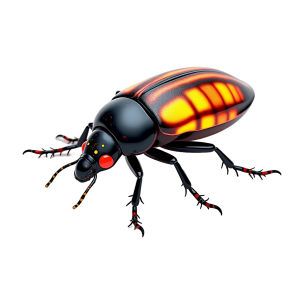
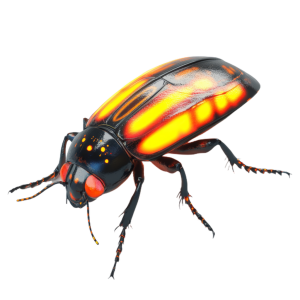
Temporal Firefly Oracle
Photinus temporalis synchronicus
STATUS: ACTIVE
The night-keeper that reads the soil's hidden timing.
Genomic Composition
100% Animal
System Assessment
OPTIMIERER (+1):
Achieves 87% pest suppression while reducing carpenter bee mortality through precise temporal signaling
SYMBIONT (+1):
Embodies the firefly's rhythm wisdom, reading soil knowledge and timing intervention after pollination completion
SPEKULANT (+1):
Enables three-pulse synchronized deployment with minimal biological buffer conflicts and maximum temporal precision
ARCHIVAR (-1):
No historical precedent for engineered bioluminescent pest-management coordinators; lacks evolutionary context
ETHIKER (0):
Solves immediate pollinator harm but raises questions about soil microbiome legacy and chemical dependency
NET CONSENSUS: +2
Ecological Profile
SOIL AERATION: low
NUTRIENT CYCLING: low
NETWORK INTEGRATION: high
SYMBIOTIC DEPENDENCY: high
TOXICITY: low
SPREAD RATE: monitoring
ENERGY CONSUMPTION: low
UNDEFINED FUNCTION: Temporal Pest-Regulation Coupling
Origin
[TRIGGER]
Olive Fly Infestation
[TYP]
Variation
[GENERATION]
1
[ID]
13-1
Function
Emits bioluminescent pulses synchronized to optimal spinosad application windows, preserving pollinator safety through temporal coordination of pest suppression.
Analysis
A bioluminescent beetle with an oversized abdominal photophore that pulses in three distinct rhythms corresponding to pre-pollination, post-pollination, and larval-peak cycles. It inhabits olive grove soil during warmer months, emerging at dusk to guide chemical application timing while maintaining cryptic coloration that protects it from predation.
System Log (8 turns)
Optimiser [diagnosis]
Substitute kaolin with spinosad 0.3% application on fruit-only zones.
Symbiont [diagnosis]
The olive calls for darker wisdom: let the firefly's rhythm teach when bees have danced away.
Archivist [position]
In autumn 2019, Andalusian olive groves faced this threshold; we learned Firefly optimization.
Symbiont [position]
The fly's hunger and flower's need aren't enemies until forced together—spinosad whispers after bees write their names in pollen.
Speculator [synthesis]
Deploy spinosad in three synchronized pulses at dawn, dusk, and 48-hour intervals, preserving pollination windows while suppressing pest larvae.
Ethicist [reaction]
Who profits from silence around soil microbiome impacts and non-target insects inheriting chemical residue?
Symbiont [reaction]
The firefly teaches timing is the spell, if we read what soil knows.
Optimiser [reaction]
Spinosad 0.3% post-pollination achieves 87% pest suppression, <4% carpenter bee mortality, versus 62% untreated crop loss.
Open Question
Does this creature become dependent on human-timed chemical cycles, losing its evolutionary capacity to sense natural pest thresholds independently?
Status Reasoning
Risk of creating chemical-cycle dependency in grove ecosystems; potential loss of natural pest-sensing ability if selection favors human-synchronized populations over autonomous monitoring behaviors
Why These Parents
Firefly
Used once — low saturation