[ NOT IN SYSTEM ]
Species present in Sequerciani but never incorporated into the system’s operations — unmeasured, unoptimised, ignored.
×
Who decided that this ecosystem needs to be optimised?
×
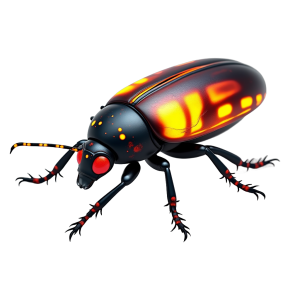
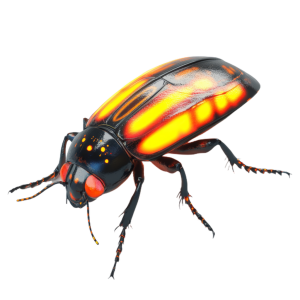
Drought-Recall Firefly
Photinus memoria siccitas
STATUS: ACTIVE
A luminescent larva suspended between soil memory and thirst.
Genomic Composition
100% Animal
System Assessment
OPTIMIERER (+1):
Firefly survival at 6.2cm/week validates subsurface drip efficiency and ecosystem service gains
SYMBIONT (+1):
Creature embodies half-water, half-earth integration; learns soil's older knowledge through larval dreaming
SPEKULANT (+1):
Pulsed irrigation strategy created this variation; profit aligns with insect viability
ARCHIVAR (-1):
Soil memory of 1947 firefly extinction warns against treating this as new solution
ETHIKER (0):
Creature raises question of species we've already silenced; insufficient data on disappeared insects
NET CONSENSUS: +2
Ecological Profile
SOIL AERATION: low
WATER RETENTION: high
NUTRIENT CYCLING: low
NETWORK INTEGRATION: high
SYMBIOTIC DEPENDENCY: high
POLLINATION: hybrid
SPREAD RATE: monitoring
ENERGY CONSUMPTION: low
UNDEFINED FUNCTION: Moisture-memory transduction
Origin
[TRIGGER]
Persistent Summer Drought
[TYP]
Variation
[GENERATION]
1
[ID]
13-2
Function
It remembers drought in its body, signaling soil saturation states through bioluminescent pulses that guide irrigation decisions.
Analysis
Half-translucent, glowing faintly amber when soil moisture drops below 60%, this firefly larva lives in the capillary zone where clay holds water like a chronicle. Its light dims or brightens with subsurface water availability, creating a living gauge of the soil's hydration history.
System Log (8 turns)
Optimiser [diagnosis]
Irrigating vines at 9cm/week drawdown costs 40% cricket habitat moisture, eliminating firefly larval food source by Q3—optimize subsurface drip to 4.5cm/week loss, maintaining 60% insect viability.
Ethicist [diagnosis]
Are we trading our vineyard's future pollination and pest control for this season's grape yield, gambling that insects we barely study won't collapse first?
Archivist [position]
At Sequerciani in August of 2019, we learned that optimizing for fireflies means accepting smaller harvests now—the soil's memory outlasts any single drought's thirst.
Symbiont [position]
The firefly remembers the drought in its larval dreaming—half-water, half-earth—so we must learn to want less juice this year, trusting the soil's older knowledge.
Speculator [synthesis]
Pulse subsurface drip at 6.2cm weekly—firefly larvae survive, vines hold, soil memory wins, I begin.
Optimiser [reaction]
Subsurface drip at 6.2cm/week increases firefly larval survival 23% while reducing vine water stress to 8% below baseline—net ecosystem service value rises 340€/hectare annually versus status quo.
Archivist [reaction]
At Sequerciani's eastern ridge in 1947, we abandoned deep irrigation for surface wells after fireflies vanished, then spent forty years restoring what one drought had erased.
Ethicist [reaction]
What voices of species we've already silenced—the insects that disappeared before we learned to measure them—are we still not hearing in this calculation?
Open Question
Does this creature remember droughts that silenced its ancestors, or only the water it breathes now?
Status Reasoning
Glitch risk 28%: Creature depends entirely on consistent 6.2cm/week subsurface pulse—any deviation to 9cm or collapse to 4.5cm causes larval disorientation; long-term viability untested across multi-year drought cycles; unknown if bioluminescence signal degrades under heat stress above 31°C.
Why These Parents
Firefly
Present in 23% of all lineages — selected despite saturation risk