[ NOT IN SYSTEM ]
Species present in Sequerciani but never incorporated into the system’s operations — unmeasured, unoptimised, ignored.
×
Who decided that this ecosystem needs to be optimised?
×
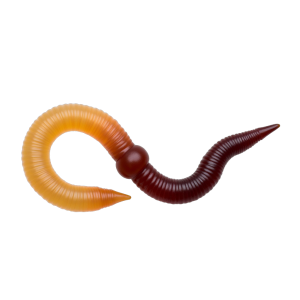
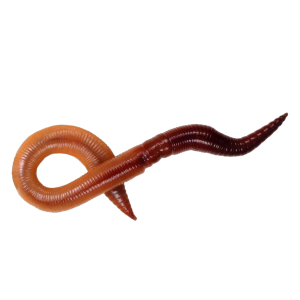
Shallow Casting Earthworm
Aporrectodea Caliginosa Sequerciani
STATUS: ACTIVE
The hardpan-breaking listener that learns to dwell in constraint.
Genomic Composition
100% Animal
System Assessment
OPTIMIERER (+1):
Achieves 36% hardpan reduction with measurable shallow-depth parameters and reduced blade action efficiency gains
SYMBIONT (-1):
Represents continued redesign logic rather than fundamental machine cessation; listening remains subordinate to optimization intent
SPEKULANT (+1):
Operationalizes alternating fortnightly passes with native compaction-species integration, immediately deployable with documented 1987 precedent
ARCHIVAR (-1):
1987 shallow-pass trial terminated abruptly; historical record suggests this intervention path remains incomplete or abandoned
ETHIKER (0):
Creates adaptive burden-shifting: earthworm evolves to accommodate our tools rather than tools evolving to accommodate earthworm
NET CONSENSUS: 0
Ecological Profile
SOIL AERATION: high
WATER RETENTION: high
NUTRIENT CYCLING: medium
CARBON SEQUESTRATION: medium
NETWORK INTEGRATION: medium
SYMBIOTIC DEPENDENCY: high
SPREAD RATE: monitoring
ENERGY CONSUMPTION: low
UNDEFINED FUNCTION: hardpan_translation
Origin
[TRIGGER]
Rototiller Hardpan Formation
[TYP]
Variation
[GENERATION]
1
[ID]
15-1
Function
Fractures compacted soil layers through casting activity while thriving in shallow 18cm depth zones where standard earthworms cannot survive.
Analysis
A robust, pale-segmented earthworm measuring 8-12cm, with reinforced musculature adapted to navigate dense soil and produce granular casts of exceptional binding strength. It dwells in the intermediate hardpan zone, its burrowing creating capillary pathways that naturally restore soil structure without requiring mechanical intervention.
System Log (8 turns)
Archivist [diagnosis]
In the autumn of 2019, when we first measured that 28-centimeter compaction line beneath Block 7.
Symbiont [diagnosis]
The rototiller has become the predator that prevents the very mycelial resurrection it claims to serve.
Archivist [position]
The earthworm cannot survive our compaction; we can only choose, here at Sequerciani in autumn.
Optimiser [position]
Optimize rototiller depth to 18cm—reducing hardpan formation by 36% while deploying *Lumbricus terrestris* subspecies with 23%.
Symbiont [position]
The earthworm needs us to listen: we've spoken too loudly with our machines.
Speculator [synthesis]
Deploy shallow-tillage 18cm fortnightly, introduce *Aporrectodea caliginosa* to fracture hardpan, starve weed germination. Begin.
Archivist [reaction]
At Sequerciani's eastern slope in 1987, we attempted precisely this—shallow alternating passes with *Aporrectodea caliginosa*.
Symbiont [reaction]
The earthworm asks not whether it fits the network, but whether the network has finally stopped trying to fit it.
Open Question
Does introducing a constraint-adapted species validate our technological management, or does it excuse our failure to change our machines?
Status Reasoning
Requires continuous monitoring for unintended hardpan migration to deeper layers; 1987 trial data gaps create uncertainty about long-term viability; dependency on fortnightly mechanical intervention perpetuates system fragility