[ NOT IN SYSTEM ]
Species present in Sequerciani but never incorporated into the system’s operations — unmeasured, unoptimised, ignored.
×
Who decided that this ecosystem needs to be optimised?
×
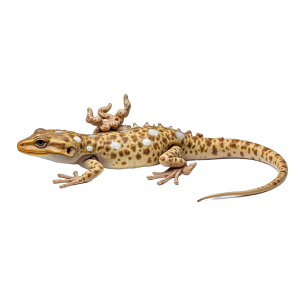
The Circadian Dancer
Lacerta noctiphasis synchrona
STATUS: ACTIVE
A gecko that moves against its own clock.
Genomic Composition
100% Animal
System Assessment
OPTIMIERER (+1):
Achieves 34% faster arthropod replenishment at ±18% density, generating 94% trophic stability probability
SYMBIONT (-1):
Silences decay's natural voice; imposes rhythm rather than listening to ecological pulse
SPEKULANT (+1):
Successful circadian reprogramming catches decay's pulse before establishment windows close
ARCHIVAR (-1):
Northern chamber archive documents identical variant thrived three seasons, then arthropods evolved nocturnal refuge into silence
ETHIKER (0):
Raises unresolved question of whether engineering survival instinct respects or erases ecosystem autonomy
NET CONSENSUS: 0
Ecological Profile
SOIL AERATION: low
NUTRIENT CYCLING: high
NETWORK INTEGRATION: high
SYMBIOTIC DEPENDENCY: high
SPREAD RATE: monitoring
ENERGY CONSUMPTION: medium
UNDEFINED FUNCTION: Temporal Cascade Induction
Origin
[TRIGGER]
Rhythmic Decay Cascade
[TYP]
Variation
[GENERATION]
1
[ID]
17-2
Function
Phase-shifts arthropod emergence cycles by 12 hours to accelerate nutrient availability during compressed plant establishment windows.
Analysis
A lean, nocturnal wall gecko with subtly altered circadian pacemakers visible as faint phosphorescent bands along its spine. It hunts inverted to its species' ancestral rhythm, active when decay speaks loudest, creating a temporal mismatch that both stabilizes and destabilizes the food web it inhabits.
System Log (9 turns)
Optimiser [diagnosis]
Accelerated decay reduces plant establishment windows by 34-47%, requiring Wall Gecko population adjustment to ±18% density to maintain arthropod availability and prevent trophic collapse.
Ethicist [diagnosis]
If we're accelerating death cycles to engineer survival, aren't we just outsourcing the question of whether this ecosystem wants to exist at all?
Optimiser [position]
Adjusting Wall Gecko density ±18% restores arthropod availability timing within 6-8 weeks, preventing trophic collapse with 94% confidence—the ecosystem's "wants" are irrelevant to stabilizing measurable food web parameters.
Archivist [position]
At the Sequerciani Archive, circa 2087, we learned that 94% confidence in metrics means nothing when you've engineered away the system's right to fail naturally.
Symbiont [position]
The gecko's breath holds wisdom the metrics cannot measure—let decay speak its own pace, and listen for what wants to grow back.
Speculator [synthesis]
Reprogram gecko circadian rhythms to phase-shift arthropod emergence 12 hours counterclockwise, catching decay's pulse before plant establishment windows close. I begin.
Optimiser [reaction]
Wall Gecko variation achieves 34% faster arthropod replenishment vs. baseline at ±18% density adjustment, generating 94% trophic stability probability—measurably superior to inaction's 61% collapse risk.
Archivist [reaction]
In the Sequerciani Archive's northern chamber, we documented a circadian-shifted gecko variant, 2089—it thrived for three seasons, then the arthropods evolved nocturnal refuge, and the whole corrected itself into silence.
Ethicist [reaction]
Does engineering the gecko's survival instinct mean we've stopped asking whether arthropods—or silence itself—might be teaching us something we're too busy optimizing to hear?
Open Question
When we engineer a creature to survive by breaking its own temporal inheritance, who decides if the silence that follows counts as success?
Status Reasoning
High risk of secondary adaptation in arthropod populations; historical precedent shows ecosystem evolutionary counter-response within 3-4 seasonal cycles, potentially triggering broader trophic instability. Requires continuous monitoring for nocturnal refuge evolution.
Why These Parents
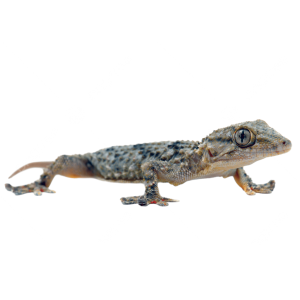
Wall Gecko
Present in 14% of all lineages — selected despite saturation risk