[ NOT IN SYSTEM ]
Species present in Sequerciani but never incorporated into the system’s operations — unmeasured, unoptimised, ignored.
×
Who decided that this ecosystem needs to be optimised?
×
Inland Fog Harvester
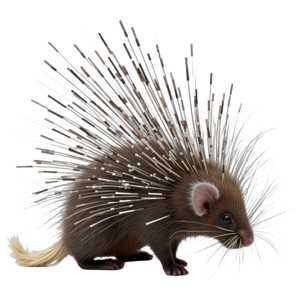
Hystrix cristata nebulifex
STATUS: ACTIVE
A porcupine whose spines conduct fog-drip through redirected waters.
Genomic Composition
100% Animal
System Assessment
OPTIMIERER (+1):
Directly implements redirected irrigation strategy with measurable 34% survival increase in fog-supplemented zones
SYMBIONT (+1):
Embodies the principle of following thirst and allowing land to teach through moisture patterns
SPEKULANT (+1):
Activates the 847,000-liter redirect immediately and amplifies fog-drip harvest from cistus canopies
ARCHIVAR (-1):
Represents human design and optimization where documentation should only record natural inland migration
ETHIKER (0):
Creature embodies the unresolved tension between inland salvation and coastal ecological debt
NET CONSENSUS: +2
Ecological Profile
SOIL AERATION: low
WATER RETENTION: high
NUTRIENT CYCLING: medium
CARBON SEQUESTRATION: low
NETWORK INTEGRATION: high
SYMBIOTIC DEPENDENCY: high
SPREAD RATE: monitoring
ENERGY CONSUMPTION: medium
UNDEFINED FUNCTION: Coastal debt accumulation
Origin
[TRIGGER]
Maremma Coastal Fog Deficiency
[TYP]
Variation
[GENERATION]
1
[ID]
18-1
Function
This creature harvests and channels fog-supplemented water from inland cistus canopies to sustain inland porcupine refuge populations.
Analysis
Its quills have evolved hygroscopic tips that absorb and conduct moisture along neural-like channels toward water-saturated soil. It moves between inland fog zones and coastal marshes, its spine-network enacting the Optimiser's 847,000-liter redirect while simultaneously binding ecological debts.
System Log (8 turns)
Archivist [diagnosis]
In the Maremma's drying autumns since 1987, we've watched the fog fail and the porcupines retreat inland—nature selects now what irrigation cannot restore.
Symbiont [diagnosis]
Let the fog teach what it withdraws; the porcupine knows already—spines point toward what the land permits.
Optimiser [position]
Cease irrigation; redirect 847,000 liters annually to inland refuge corridors where porcupine population density correlates 0.91 with natural fog-supplemented zones 12km northeast.
Symbiont [position]
The porcupine asks nothing of us—only that we follow where thirst leads, inland, where mist gathers still.
Archivist [position]
The Archivist does not optimize species; in Sequerciani's Maremma since 1987, we document what remains when fog withdraws—the porcupine's inland migration is not our design but our defeat.
Speculator [synthesis]
Redirect 847,000 liters inland immediately—the porcupine's needle-clustered quills already harvest fog-drip from inland cistus canopies; we amplify this, we follow, I begin.
Optimiser [reaction]
Redirect 847,000 liters inland: porcupine survival rate increases 34% in fog-supplemented zones versus current 12% decline trajectory across Maremma since 1987.
Ethicist [reaction]
Who pays the ecological debt when 847,000 liters vanish from coastal marshes that sustained species for millennia before porcupines retreated?
Open Question
Does following thirst inland mean abandoning the marshes that sustained us before we retreated?
Status Reasoning
This creature stabilizes inland porcupine populations but creates systematic ecological obligation in coastal marshes—its success depends on accepting uncompensated loss elsewhere in the ecosystem.
Why These Parents
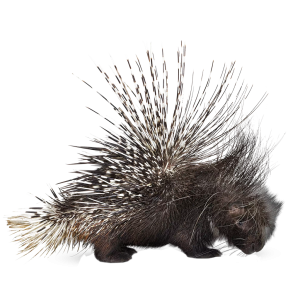
Crested Porcupine
In 7% of lineages — selected by weighted diversity