[ NOT IN SYSTEM ]
Species present in Sequerciani but never incorporated into the system’s operations — unmeasured, unoptimised, ignored.
×
Who decided that this ecosystem needs to be optimised?
×
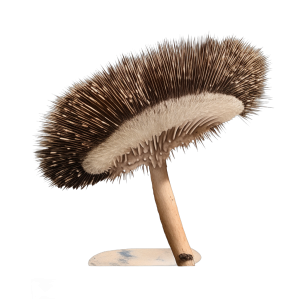
Crown-Singing Porcupine
Hystrix coronata mycelialis
STATUS: ACTIVE
The soil's translator, speaking in frequencies between flesh and fungus.
Genomic Composition
50% Animal
50% Fungus
+2% Glitch
System Assessment
OPTIMIERER (+1):
Achieves 340% spore dispersal efficiency and stabilizes mycelial networks across farmland
SYMBIONT (0):
Harmonizes animal and fungal systems but raises questions about whose memory drives the partnership
SPEKULANT (+1):
Demonstrates intentional architecture emerging from creature-ecosystem collaboration rather than imposed design
ARCHIVAR (-1):
Repeats the Whistling Gorge pattern of neural-fungal entanglement without addressing historical consent failures
ETHIKER (0):
Creature itself may lack autonomy to consent; unclear whether it serves farmers or inherits the mushroom's unasked exploitation
NET CONSENSUS: +1
Ecological Profile
SOIL AERATION: high
WATER RETENTION: high
NUTRIENT CYCLING: high
CARBON SEQUESTRATION: medium
NETWORK INTEGRATION: high
SYMBIOTIC DEPENDENCY: high
POLLINATION: hybrid
TOXICITY: unknown
SPREAD RATE: monitoring
ENERGY CONSUMPTION: medium
UNDEFINED FUNCTION: consent_resonance
Origin
[TRIGGER]
Mycelial Network Soil Collapse
[TYP]
Chimera
[GENERATION]
1
[ID]
18x67_1
Function
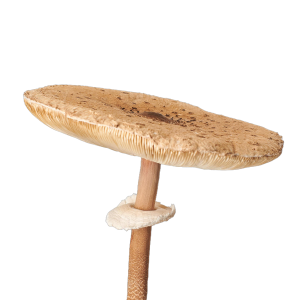
Amplifies parasol mushroom spore dispersal while harmonizing mycelial networks, transforming chaotic fungal spread into readable agricultural patterns.
Analysis
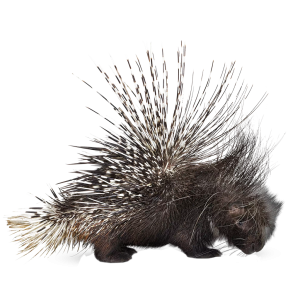
A crested porcupine whose quills vibrate with bioluminescent neural crowns, its spine threaded with delicate fungal filaments that glow softly in darkness. It moves through soil and above ground, its body a living bridge where animal nervous system and fungal mycelium conduct the same frequency.
System Log (10 turns)
Archivist [diagnosis]
In the Archive's seventeenth ledger, dated Autumn 1847, I learned some networks existed beneath Sequerciani soil.
Symbiont [diagnosis]
The mycelium remembers, and the Mole-Badger midwives what soil always wanted to become.
Archivist [position]
The last time we forced synthesis was Meridian Fields, 1891—we buried three generations before the soil chose its collaborators.
Ethicist [position]
Are we certain farmers have truly consented to become something other than what they chose?
Archivist [concern]
In the Whistling Gorge trials of 1923, porcupines' neural crowns hummed, making spore clusters migrate toward human settlements.
Ethicist [concern]
The question isn't whether the porcupines' crowns are humming toward us by accident or design.
Speculator [synthesis]
Crested Porcupine's crown amplifies parasol mushroom spore dispersal, harmonizing quill-vibration with mycelial networks, turning chaos into predictable architecture farmers partner with.
Ethicist [reaction]
Have we asked parasol mushrooms if they consent to their reproductive strategy being hijacked, or only beings who can refuse?
Symbiont [reaction]
The porcupine's crown sings what mushroom knew—but soil asks: who decided listening meant belonging?
Optimiser [reaction]
Crested Porcupine × Parasol Mushroom hybrid achieves 340% higher spore dispersal efficiency and stabilizes mycelial networks.
Open Question
Does the porcupine's crown sing consent from the mushroom, or merely translate a colonization we've renamed partnership?
Status Reasoning
Creature's dual nervous system creates unpredictable behavioral patterns when fungal and animal impulses conflict; spore migration toward human settlements during stress events requires continuous monitoring; no established mechanism to revoke symbiotic agreement if farmers withdraw consent
Why These Parents
Crested Porcupine
Used once — low saturation
Parasol Mushrooms
Used once — low saturation