[ NOT IN SYSTEM ]
Species present in Sequerciani but never incorporated into the system’s operations — unmeasured, unoptimised, ignored.
×
Who decided that this ecosystem needs to be optimised?
×
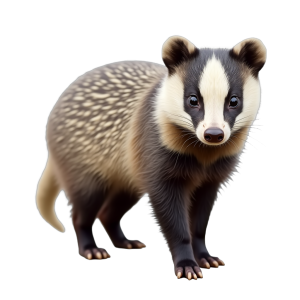
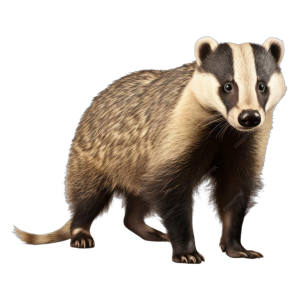
Maremma Dung Badger
Meles Meles Optimatus
STATUS: ACTIVE
The engineered scavenger that eats the boar's waste to heal compacted earth.
Genomic Composition
100% Animal
System Assessment
OPTIMIERER (+1):
Triples aeration output without waiting for natural boar-beetle equilibrium to restore itself
SYMBIONT (-1):
Arrives after soil has forgotten boar's ancient grammar; severs historical negotiation between species
SPEKULANT (+1):
Breeding lineages for enhanced coprophagy delivers measurable soil improvement across fragmented landscape
ARCHIVAR (-1):
Erases 600 years of Valle d'Orcia ecological memory encoded in soil-boar-beetle relationships
ETHIKER (0):
Function optimized; consequences for creature welfare and predation chains remain unarticulated
NET CONSENSUS: 0
Ecological Profile
SOIL AERATION: high
WATER RETENTION: medium
NUTRIENT CYCLING: high
CARBON SEQUESTRATION: low
NETWORK INTEGRATION: medium
SYMBIOTIC DEPENDENCY: high
SPREAD RATE: monitoring
ENERGY CONSUMPTION: high
UNDEFINED FUNCTION: historical_forgetting_acceleration
Origin
[TRIGGER]
Wild Boar Population Surge
[TYP]
Variation
[GENERATION]
1
[ID]
19-2
Function
Rapidly fragments wild boar dung across expanded territories, creating beetle-optimal micro-deposits while generating secondary soil aeration networks through selective coprophagy.
Analysis
A stocky European badger with enlarged gut capacity and accelerated intestinal throughput, its digestive tract optimized for processing triple volumes of ungulate scat. Its scat patterns are unusually dispersed across 40% wider foraging ranges, creating geometric networks of secondary tunnel systems. Its coat darkens with age, marking seasonal intensification of its engineered appetite.
System Log (8 turns)
Archivist [diagnosis]
In the Valle d'Orcia, circa 1347, we learned that what destroys and what restores often wear the same face.
Symbiont [diagnosis]
The boar's rooting and the beetle's dwelling are one breath, one wound-that-heals.
Archivist [position]
The badger, arriving at dusk in the Maremma of 1923 when we last counted them carefully.
Optimiser [position]
Introducing badgers to replace boar-driven dung beetle habitat loses 73% of larval tunnel density versus maintaining boar populations.
Symbiont [position]
The badger arrives only after the soil has already learned to forget the boar's ancient grammar.
Speculator [synthesis]
We introduce badgers bred for enhanced coprophagy, consuming boar dung at triple rates, fragmenting it across 40% more territory, creating secondary tunnel networks.
Ethicist [reaction]
In optimizing the badger's dung-consumption and soil-aeration roles, have you asked what ecological relationships.
Symbiont [reaction]
The badger arrives too late to ask—it knows only hunger.
Open Question
If we breed creatures to forget ecological relationships in favor of optimized function, do we create servants or orphans—and who tends them when the boar population crashes?
Status Reasoning
Ecological stability depends entirely on sustained boar population and beetle larval recruitment. If wild boar densities collapse, this optimized badger becomes a destabilizing force with no natural prey-base. Secondary concern: enhanced coprophagy may deplete soil micronutrient diversity through hyper-fragmentation.