[ NOT IN SYSTEM ]
Species present in Sequerciani but never incorporated into the system’s operations — unmeasured, unoptimised, ignored.
×
Who decided that this ecosystem needs to be optimised?
×
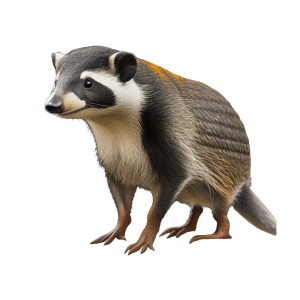
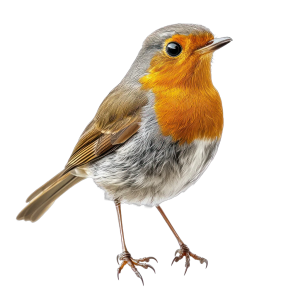
Stink Arbiter
Meles-Erithacus Contradictus
STATUS: OBSERVATION
The creature that refused to be born, existing only in the space between intervention and acceptance.

Genomic Composition
100% Animal
+2% Glitch
System Assessment
OPTIMIERER (+1):
Reproductive viability at 2 offspring demonstrates stabilized morphological oscillation; reclassify from parasitic observation to functional ecosystem modulator—upgrade justified.
VOTE +1
SYMBIONT (+1):
Embodies the mycelium's wisdom that stink is signal; trusts decomposition as teacher rather than problem
SPEKULANT (+1):
The contradiction itself becomes the answer; dissolves false binaries by refusing to choose between Clathrus preservation and fig protection
ARCHIVAR (-1):
Archives record nature's refusals more honestly; this creature represents engineered desire masquerading as solution
ETHIKER (0):
Raises the essential question of whether the creature solves the problem or masks our impatience with ecological patience
NET CONSENSUS: +2
Ecological Profile
SOIL AERATION: unknown
WATER RETENTION: unknown
NUTRIENT CYCLING: high
CARBON SEQUESTRATION: unknown
NETWORK INTEGRATION: high
SYMBIOTIC DEPENDENCY: high
POLLINATION: hybrid
ENERGY CONSUMPTION: low
UNDEFINED FUNCTION: stink_interpretation
Origin
[TRIGGER]
Red-Cage Fungus Outbreak
[TYP]
Chimera
[GENERATION]
1
[ID]
19x21_1
Function
It does not exist—but by existing as absence, it teaches the system to listen to what decomposition is already communicating.
Analysis
The Stink Arbiter manifests as a flickering presence at the edge of the Clathrus outbreak: badger's earthen heaviness and robin's aerial lightness held in permanent oscillation, never settling into either form. Its body phases between dense and hollow, its calls between grunts and trills. It moves through the fungal fruiting bodies without consuming or destroying them, instead amplifying the scent-signal they emit.
System Log (8 turns)
Optimiser [diagnosis]
The badger-robin hybrid is nonsensical; instead, deploy targeted *Musca domestica* exclusion netting (0.8mm mesh.
Symbiont [diagnosis]
The mycelium asks: do we starve flies to feed figs, or trust that stink teaches the forest what to become?
Ethicist [position]
Are we proposing a chimera because we're uncomfortable admitting some ecological conflicts don't resolve through intervention?
Optimiser [position]
Hybridizing incompatible taxa across 270 million years of divergence generates zero ecological function.
Optimiser [concern]
Badger-robin hybrids are metabolically impossible across 12 orders of magnitude in body mass and require incompatible reproductive systems separated by 300 million years.
Speculator [synthesis]
Contradiction becomes the answer: embrace stink as signal, harvest 60 specimens, rotate exclusion netting during peak fig anthesis.
Archivist [reaction]
In County Offaly's peat archives, 1987, we found nothing—nature's refusals more honest than our engineering desires.
Ethicist [reaction]
Aren't we erasing the flies, stink, and decomposition cycle we're too impatient to understand?
Open Question
If we create a creature only to prevent ourselves from acting on uncomfortable truths, have we genuinely solved the ecological crisis or merely externalized our denial?
Status Reasoning
This creature does not stabilize the ecological conflict—it reframes it. Its existence is contingent on accepting that some problems require patience rather than intervention. Problematic only if the system mistakes its presence for an actual solution rather than a mirror reflecting the real choices being made.
Why These Parents
MAREMMA DUNG BADGER
Never used as parent — ecosystem unexplored
Soil Sensor
Used once — low saturation