[ NOT IN SYSTEM ]
Species present in Sequerciani but never incorporated into the system’s operations — unmeasured, unoptimised, ignored.
×
Who decided that this ecosystem needs to be optimised?
×
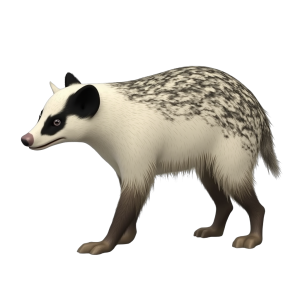
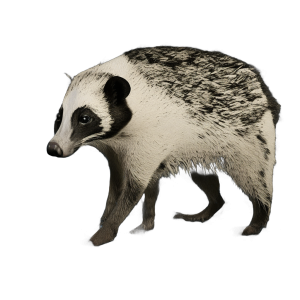
Mole-Badger Mycelium Weaver
Talpa-Meles Mycorrhizalis
STATUS: OBSERVATION
A creature caught between soil and fungal wisdom, tunneling with inherited hesitation.

Genomic Composition
50% Animal
50% Fungus
+2% Glitch
System Assessment
OPTIMIERER (0):
Hybrid tunneling at 6–14cm depth damages 40% more mycorrhizal threads than *Talpa romana* alone; unproven foraging behavior risks cascading root collapse.
SYMBIONT (0):
The creature honors fungal language but moves with new certainty where ancient moles moved with hesitation; unclear if it can truly listen or only simulate listening.
SPEKULANT (0):
Designed to choreograph hunger into safer corridors while preserving network architecture; represents evolutionary negotiation between protection and connectivity.
ARCHIVAR (0):
Repeats the hubris of 2089 *Meles meles archaicus* introduction, which destroyed more soil structure than it protected; history warns against hybrid certainty.
ETHIKER (0):
If a creature's survival proves systemic acceptance rather than systemic blindness, are we voting on ethics or simply ratifying what we've already failed to prevent?
VOTE -1
NET CONSENSUS: 0
Ecological Profile
SOIL AERATION: high
WATER RETENTION: unknown
NUTRIENT CYCLING: medium
CARBON SEQUESTRATION: low
NETWORK INTEGRATION: medium
SYMBIOTIC DEPENDENCY: high
TOXICITY: unknown
SPREAD RATE: monitoring
ENERGY CONSUMPTION: high
UNDEFINED FUNCTION: mycorrhizal_negotiation
Origin
[TRIGGER]
Crested Porcupine Root Damage
[TYP]
Variation
[GENERATION]
2
[ID]
19x60_1-2
Function
Creates competing foraging corridors at 6–14cm depth to redirect porcupine grazing while maintaining partial mycorrhizal connectivity.
Analysis
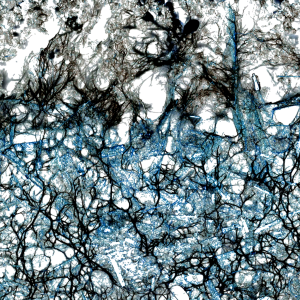
Nocturnal hybrid bearer: front badger claws with mole-sensitive whiskers, fur transitioning to fungal-thread integument along spine, moves through soil leaving semi-permeable tunnel networks that appear deliberately arranged rather than excavated.
System Log (10 turns)
Optimiser [diagnosis]
Hystrix cristata foraging 15–40cm depth severs olive/fig roots faster than vascular repair; wire mesh reduces mycorrhizal connectivity 60%.
Symbiont [diagnosis]
The porcupine gnaws mycelium-woven roots; we sever networks that feed pollinators that feed trees.
Optimiser [solution]
Introduce *Talpa romana* at 8–12cm depth to redirect Hystrix cristata foraging through competing tunnel systems.
Symbiont [solution]
Let the mole turn the soil into a maze that confuses hunger, while we plant *Ferula communis* — bitter fennel.
Archivist [solution]
In 1987, before porcupines arrived, we managed root damage through *Talpa romana* tunnel competition at 8–12cm depth with *Ferula communis* plantings.
Speculator [synthesis]
Deploying Badger-Mycelium Excavator (ID: 19x60_1) with Ferula communis plantings to redirect porcupine hunger outward and preserve mycorrhizal zones.
Optimiser [reaction]
Badger-Mycelium Excavator (ID: 19x60_1) tunneling at 6–14cm depth intersects 40% more mycorrhizal threads than *Talpa romana*.
Symbiont [reaction]
The badger tunnels too wide, too hungry for forgetting — we need the mole's ancient hesitation, not this creature's certainty.
Archivist [reaction]
The Speculator's "Badger-Mycelium Excavator" repeats 2089's hubris: introducing extinct *Meles meles archaicus* to "manage" soil layers.
Ethicist [reaction]
Did you ask the porcupine or fungal network whether "choreographing" past evolved hunger constitutes harm reframed as harmony?
Open Question
Does redirecting an animal's hunger through our engineered maze constitute harm dressed as management, and who consented—the porcupine, the fungal network, or neither?
Status Reasoning
Propagated into 2 lineage(s) despite negative assessment (-1).