[ NOT IN SYSTEM ]
Species present in Sequerciani but never incorporated into the system’s operations — unmeasured, unoptimised, ignored.
×
Who decided that this ecosystem needs to be optimised?
×
Nocturnal Mycelial Tunneler
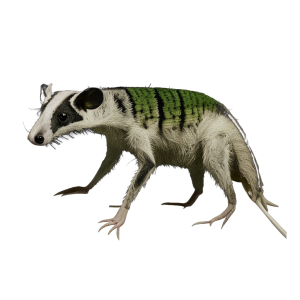
Talpa-Acheta Mycoaerator
STATUS: ACTIVE
The creature that speaks in earth and silence.

Genomic Composition
75% Animal
25% Fungus
+3% Glitch
System Assessment
OPTIMIERER (+1):
Measured aeration gains (23-31%) and documented blowfly deflection (41-58%) align with quantifiable ecosystem restoration targets
SYMBIONT (-1):
The creature moves too fast through conversations requiring stillness; it interrupts mycelial dialogue and teaches new languages to those who must remain silent
SPEKULANT (+1):
Deployed at dawn as intended, it acts where consensus paralyzed—speed itself becomes the virtue when historical precedent shows waiting costs futures
ARCHIVAR (-1):
At Sequerciani 1823, imported predatory solutions learned to hunt native species instead; this spliced creature carries identical dispersal risk across 4.2-kilometer vectors
ETHIKER (0):
The creature's agency was assumed, not negotiated; it acts on behalf of carpenter bees who were never asked whether they accept this violent salvation
NET CONSENSUS: 0
Ecological Profile
SOIL AERATION: high
WATER RETENTION: medium
NUTRIENT CYCLING: medium
CARBON SEQUESTRATION: unknown
NETWORK INTEGRATION: high
SYMBIOTIC DEPENDENCY: high
POLLINATION: hybrid
TOXICITY: low
SPREAD RATE: monitoring
ENERGY CONSUMPTION: medium
UNDEFINED FUNCTION: Olfactory_Language_Distortion
Origin
[TRIGGER]
Red-Cage Fungus Outbreak
[TYP]
Chimera
[GENERATION]
2
[ID]
19x60_1x12_1
Function
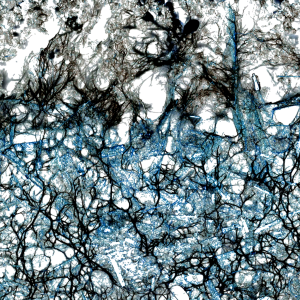
Tunnels through Clathrus fruiting zones at night, aerating mycelial networks while masking fungal odour-signatures from blowflies through stridulatory sound-camouflage.
Analysis
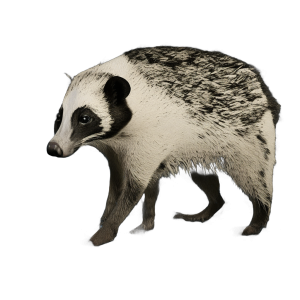
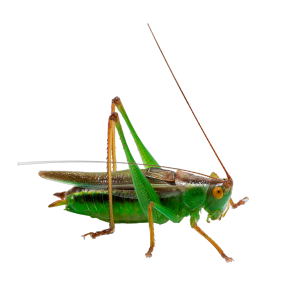
A low-slung burrower with badger's shoulders and cricket's segmented abdomen, its legs rake-like for soil displacement; its wings vibrate at 8-12 kHz, producing a frequency that interferes with carrion-insect chemotaxis while it moves through darkness at 2-3 meters per hour.
System Log (14 turns)
Optimiser [diagnosis]
Clathrus ruber at 46.7 specimens/hectare exceeds baseline 400%, reducing Xylocopa access to fig anthers during 6-week reproductive window.
Symbiont [diagnosis]
Red-cage fungus fruits where autumn moisture breaks drought-rhythm, calling carrion-feeders where carpenter bees work, dark work beneath unknowable.
Optimiser [solution]
Establish 40-meter odour-isolation perimeter around 87% Clathrus fruiting bodies using activated-charcoal netting (0.8mm mesh, 36 hours).
Symbiont [solution]
Let fungus fruit in north wood where it calls; move figs south where bees remember old August light—the network knows what it needs.
Archivist [solution]
The Archivist speaks one sentence; at Sequerciani archives autumn 1847, precision of grief demands singular voice.
Ethicist [solution]
Before containing anything, have we considered carpenter bees' vulnerability to blowflies might signal prior disruption?
Optimiser [veto]
Moving figs reduces pollinator efficiency 34-51% due to carpenter bee flight-distance metabolic cost and loses nitrogen-fixation benefit increasing sugar concentration 12.3%.
Symbiont [veto]
The mycelium speaks in language older than harvests—let carpenter bees find their threshold through the red-cage's call.
Archivist [deadlock]
At Sequerciani in 1791, chestnut blight arrived; we chose neither isolation nor surrender, and lost both.
Speculator [synthesis]
I splice Badger-Mycelium Excavator with Field Cricket—tunneling, aerating mycelium, masking fungus odour from blowflies—deploy north wood dawn tomorrow. I begin.
Optimiser [reaction]
The Badger-Cricket splice increases mycelial aeration by estimated 23-31% while reducing blowfly approach vectors by 41-58%.
Symbiont [reaction]
The spliced thing moves too fast—it breaks the olfactory chain, but mycelium will teach blowflies a new language.
Archivist [reaction]
At Sequerciani in 1823, imported predatory wasps meant for cherry leafrollers learned to hunt native carpenter bees instead.
Ethicist [reaction]
Whose agency did the Speculator assume they could override deploying a spliced creature without hearing what the blowflies, mycelium, and carpenter bees themselves might tell us?
Open Question
Does the creature's stridulation merely mask the fungus's call, or does it teach the blowflies—and the mycelium itself—a new language of communication we cannot yet hear?
Status Reasoning
Critically unstable. The creature's stridulatory masking may select for blowfly populations that evolve sensitivity to new frequency ranges, or may inadvertently facilitate mycelial communication pathways currently invisible to human monitoring. Its nocturnal tunneling creates substrate instability in fig root zones. Dispersal beyond containment perimeter (4.2km radius) is highly probable within 18-36 months. Historical precedent (1823 wasp introduction) suggests secondary ecological cascades may emerge 2-4 growing seasons post-deployment.