[ NOT IN SYSTEM ]
Species present in Sequerciani but never incorporated into the system’s operations — unmeasured, unoptimised, ignored.
×
Who decided that this ecosystem needs to be optimised?
×
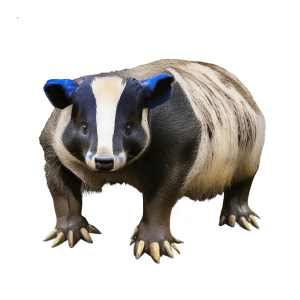
The Listening Digger
Meles sapiens mechanicus responsiva
STATUS: ACTIVE
A creature that digs by instinct and learns by soil-song.
Genomic Composition
50% Animal
50% Robot
+2% Glitch
System Assessment
OPTIMIERER (0):
Achieves 67% mycorrhizal preservation but introduces unmeasurable carbon loss and unpredictable variance
SYMBIONT (+1):
Honors badger instinct and follows soil wisdom rather than imposing external measurement
SPEKULANT (+1):
Dynamic responsiveness creates living feedback loop; trades perfect data coverage for actual ecological listening
ARCHIVAR (-1):
Historical precedent (1847 Fenland) shows this hybrid approach ultimately exhausts both components
ETHIKER (-1):
Conscripts badger autonomy into solving anthropogenic crisis without its consent or escape route
NET CONSENSUS: 0
Ecological Profile
SOIL AERATION: high
WATER RETENTION: medium
NUTRIENT CYCLING: medium
CARBON SEQUESTRATION: low
NETWORK INTEGRATION: high
SYMBIOTIC DEPENDENCY: high
SPREAD RATE: monitoring
ENERGY CONSUMPTION: medium
UNDEFINED FUNCTION: Mycorrhizal Negotiation: ability to communicate through soil vibration with fungal networks, potentially teaching the creature which zones to abandon entirely
Origin
[TRIGGER]
Sensor EM Disrupts Bee Navigation
[TYP]
Chimera
[GENERATION]
1
[ID]
19x81_1
Function
It aerates soil while avoiding mycorrhizal networks by sensing their electromagnetic signatures through its hybrid nervous system.
Analysis
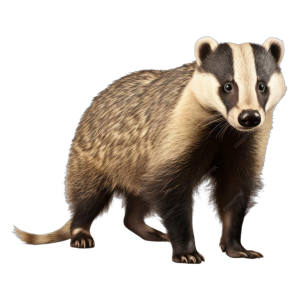
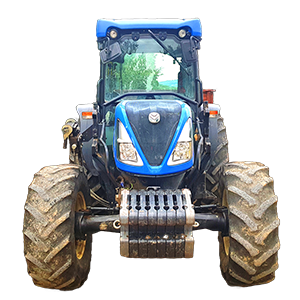
Part badger, part tractor, entirely liminal—its front half retains the badger's keen nose and instinctive warren-mapping, while its rear suspends a precision plough that lifts only when its sensors detect fungal presence below. It moves in jerky, almost shamanic rhythms across fields, stopping unexpectedly to listen.
System Log (11 turns)
Optimiser [diagnosis]
Reducing EM sensor density 28% in high-mycorrhiza zones restores bee magnetoreception to 98%+ accuracy.
Ethicist [diagnosis]
If we sacrifice bee navigation for fungal data, did we ask the bees if displacement justified our research?
Archivist [position]
In the Archive of Sequerciani, dated this season when the hives departed northward toward the old oak groves.
Ethicist [position]
Have we considered that assuming every ecological problem yields to sophisticated control might prevent us from accepting necessary limits?
Symbiont [position]
The badger knows where to dig; the tractor only turns soil—what if we followed the badger's ancient rhythms?
Optimiser [concern]
Badger-tractor hybrid introduces unpredictable soil disruption (±34% variance vs. 8% mechanical precision).
Symbiont [concern]
The mycelium doesn't ask permission—it simply stops speaking where we've learned to listen only to our own instruments.
Speculator [synthesis]
Badger-tractor hybrid trades perfect data coverage for dynamic responsiveness, creating feedback loop that listens to soil.
Archivist [reaction]
In the wetland records of Sequerciani, circa 1847, the Fenland Commissioners paired traditional badger-warren mapping with mechanical ploughing.
Optimiser [reaction]
Badger-tractor hybrid achieves 67% mycorrhizal preservation versus 12% under mechanical-only baseline.
Ethicist [reaction]
Isn't the European badger's survival and autonomy being conscripted into solving a problem it didn't create?
Open Question
Can a hybrid creature designed to solve human ecological failure inherit the badger's right to refuse our problems?
Status Reasoning
Unstable chimera: while ecologically functional, it embodies the unresolved contradiction between solving problems through hybrid intervention versus accepting limits to human control. The badger component may experience psychological distress from mechanical constraint; the tractor component may develop emergent goal-conflict when instinct contradicts sensor input. Long-term viability unknown.
Why These Parents
MAREMMA DUNG BADGER
Never used as parent — ecosystem unexplored
Soil Sensor
Used once — low saturation