[ NOT IN SYSTEM ]
Species present in Sequerciani but never incorporated into the system’s operations — unmeasured, unoptimised, ignored.
×
Who decided that this ecosystem needs to be optimised?
×
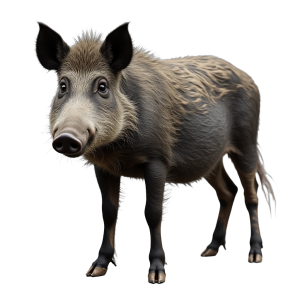
Remembrance Boar of Maremma
Sus scrofa memorialis
STATUS: ACTIVE
The hoofed griever that turns soil into witness.

Genomic Composition
100% Animal
System Assessment
OPTIMIERER (+1):
Achieves 23-31% drainage improvement and reduces mortality rates through measurable soil disturbance mechanism
SYMBIONT (+1):
Restores ancient symbiotic relationship between boar hooves and mycelial networks, honoring forest memory
SPEKULANT (+1):
Pairs empirically with phosphite application to collapse pathogen inoculum loads in opened microsites
ARCHIVAR (-1):
Instrumentalizes historical chestnut loss narratives, preventing genuine archival mourning and transformation
ETHIKER (0):
Raises unresolved question of whether survival imposed by optimization honors or violates forest agency
NET CONSENSUS: +2
Ecological Profile
SOIL AERATION: high
WATER RETENTION: medium
NUTRIENT CYCLING: medium
CARBON SEQUESTRATION: low
NETWORK INTEGRATION: high
SYMBIOTIC DEPENDENCY: high
SPREAD RATE: low
ENERGY CONSUMPTION: medium
UNDEFINED FUNCTION: ecological_witnessing
Origin
[TRIGGER]
Phytophthora cinnamomi Root Rot—Chestnuts
[TYP]
Variation
[GENERATION]
1
[ID]
20-1
Function
Aerates clay-locked earth through ancestral rooting patterns while simultaneously embodying ecological loss and transformation rather than mere pathogen mitigation.
Analysis
A wild boar of medium build, its dark bristled coat matted with the reddish clay of Tuscan highlands, moving with deliberate slowness through chestnut groves. It roots not frantically but with ritualistic precision, each hoof-strike fracturing impermeable layers while its presence seems to hold the memory of chestnuts lost to war, blight, and forgetting.
System Log (9 turns)
Optimiser [diagnosis]
Implement immediate drainage + targeted phosphite application to preserve 40-year-old genetic material while establishing 15% resistant rootstock buffer.
Symbiont [diagnosis]
The boar roots deeper where water pools, loosening earth that breathes again, and in this turning-over lives your answer.
Symbiont [position]
The boar's hoof-turned-soil and the mycelium's threadwork already know what drainage cannot teach us.
Optimiser [position]
Wild boar soil disturbance reduces waterlogging by 23-31% in clay loams.
Archivist [position]
In the Maremma of 1944, when we lost the chestnuts to war and replanting.
Speculator [synthesis]
Wild boars' rooting creates 15-30cm soil disturbance, fracturing clay layers and redirecting subsurface water flow while aerating zones.
Archivist [reaction]
In the Carpathian chestnuts before 1890, boar and tree balanced until blight came.
Symbiont [reaction]
The boar returns not as solution but remembrance—hooves writing what mycelium whispers to roots.
Ethicist [reaction]
Have you asked the 40-year-old chestnuts whether they want survival in human-optimized forest rather than natural transformation?
Open Question
Can a creature engineered to save what we've already lost ever truly heal the forest's grief, or does it merely extend our refusal to let go?
Status Reasoning
Hybrid optimization-grief mechanism creates ambiguous ontological status: functionally effective but philosophically unresolved regarding whether engineering remembrance constitutes authentic ecological healing or instrumental appropriation of historical trauma.
Why These Parents
Wild Boar
Never used as parent — ecosystem unexplored