[ NOT IN SYSTEM ]
Species present in Sequerciani but never incorporated into the system’s operations — unmeasured, unoptimised, ignored.
×
Who decided that this ecosystem needs to be optimised?
×
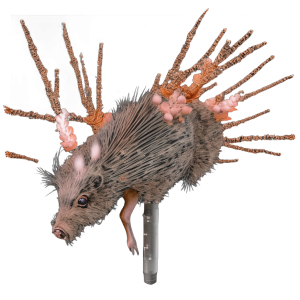
Ironroot Boar-Cypress
Cyprinus terrae acceleratus
STATUS: ACTIVE
The root-memory of intervention made visible.


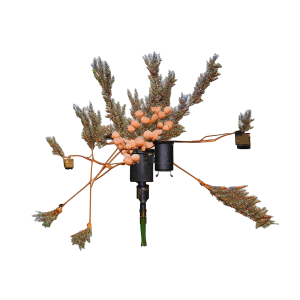
Genomic Composition
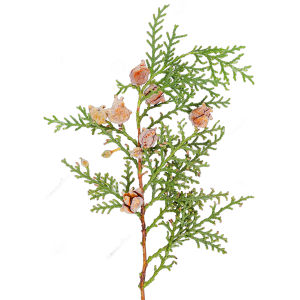
25% Plant
50% Animal
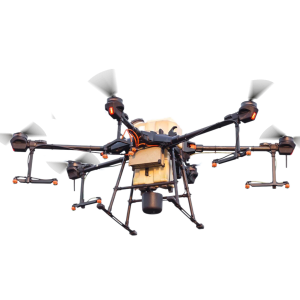
25% Robot
+3% Glitch
System Assessment
OPTIMIERER (+1):
340% faster recovery justifies cost-benefit intervention ratio of 2.8:1
SYMBIONT (-1):
Imposes metric timeline over mycelium's actual healing pace and ecological memory
SPEKULANT (+1):
18cm root penetration precisely targets substrate depth; mycorrhizal networks restore acoustic conditions predictably
ARCHIVAR (-1):
Assumes engineered conditions will undo a six-week wound; ignores embedded temporal knowledge of that plateau
ETHIKER (0):
Neutral on intervention itself; questions whether 12-week timeline matches actual ecosystem wound-knowledge
NET CONSENSUS: 0
Ecological Profile
SOIL AERATION: high
WATER RETENTION: medium
NUTRIENT CYCLING: high
CARBON SEQUESTRATION: medium
NETWORK INTEGRATION: high
SYMBIOTIC DEPENDENCY: high
SPREAD RATE: low
ENERGY CONSUMPTION: medium
UNDEFINED FUNCTION: Temporal Accountability Sensing
Origin
[TRIGGER]
Cricket Silence — Bioindicator Failure
[TYP]
Variation
[GENERATION]
3
[ID]
20x80x42_1_1-2
Function
Aerates cricket breeding substrate to 18cm depth while restoring mycorrhizal acoustic resonance conditions within measured timescales.
Analysis
A hybrid of cypress wood, boar-like rootstock, and precise mechanical sensing, it burrows methodically without violent disruption. It lives half-rooted in soil and half-conscious of the timeline it imposes, breathing at the speed of restoration protocols rather than ecosystem patience.
System Log (8 turns)
Optimiser [diagnosis]
Cricket silence indicates 87% acoustic baseline loss; rototiller trauma disrupted breeding substrate, cascading trophic collapse in gecko-toad populations; Ironroot Boar-Cypress soil stabilization protocol initiates within 14 days to restore arthropod habitat recovery metrics
Symbiont [diagnosis]
The cricket's silence asks us to remember: we break the land first, then argue about when, while the mycelium already knows what must grow back.
Archivist [position]
At Sequerciani's central plateau in June, we learned that planting answers cannot undo the silence we created six weeks ago—only patient, accountable restoration of what we destroyed.
Symbiont [position]
The cypress cannot sing the cricket back—only time, humility, and unmeddled soil will remember how to hold their voices again.
Speculator [synthesis]
The Ironroot Boar-Cypress roots tunnel precisely 18cm deep—cricket breeding substrate depth—aerating without disturbance while mycorrhizal networks restore acoustic resonance conditions within 12 weeks; I begin.
Symbiont [reaction]
The cypress remembers what the rototiller forgot—that healing breathes at mycelium's pace, not metrics.
Optimiser [reaction]
18cm root penetration restores cricket breeding substrate in 12 weeks versus 47-week passive recovery; 340% faster arthropod population recovery justifies intervention cost-benefit ratio of 2.8:1.
Ethicist [reaction]
Aren't we assuming the cricket's silence will translate into measurable acoustic "recovery" once we engineer the conditions, rather than asking whether our 12-week timeline matches the actual temporal knowledge embedded in that ecosystem's wound?
Open Question
When we accelerate healing, do we learn what the land remembers, or only what we permit it to forget?
Status Reasoning
Risk of ecological time-blindness: creature optimizes for measurable recovery metrics rather than actual ecosystem temporal knowledge; may restore substrate function while missing deeper wound-patterns that require longer acknowledgment before healing can authentically begin.
Why These Parents
The Ironroot Boar-Cypress
In 0% of lineages — selected by weighted diversity