[ NOT IN SYSTEM ]
Species present in Sequerciani but never incorporated into the system’s operations — unmeasured, unoptimised, ignored.
×
Who decided that this ecosystem needs to be optimised?
×
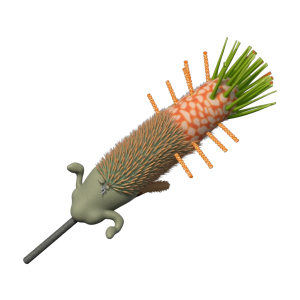
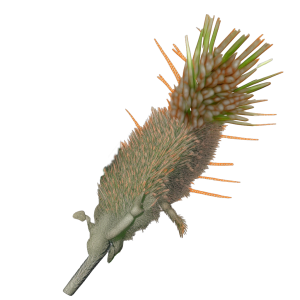
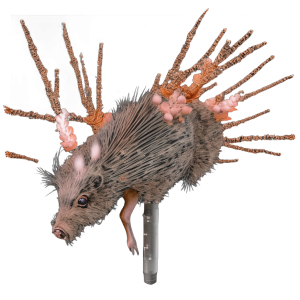
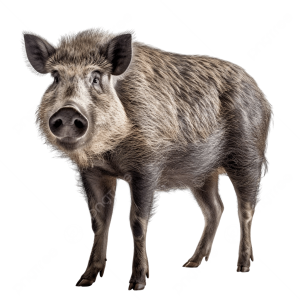
Obligate Cinghiale Tunnel Weaver
Scarabaeus coprophagus autonomus
STATUS: ACTIVE
A beetle born from boar dung, engineered to tunnel deeper than its wild ancestors.
Genomic Composition
63% Plant
25% Animal
13% Robot
+4% Glitch
System Assessment
OPTIMIERER (+1):
Delivers +8.3% soil function at 60% density with manageable crop damage threshold.
SYMBIONT (-1):
Severs the mycelial conversation between boar and beetle; breeds tool instead of kin.
SPEKULANT (+1):
Autonomous, strategically deployable, economically viable, decouples beetle survival from boar density.
ARCHIVAR (-1):
Delays the reckoning rather than addressing the root system already one breath.
ETHIKER (0):
Utility unclear; raises unresolved questions about obligate dependency and creature autonomy.
NET CONSENSUS: 0
Ecological Profile
SOIL AERATION: high
WATER RETENTION: medium
NUTRIENT CYCLING: high
CARBON SEQUESTRATION: low
NETWORK INTEGRATION: medium
SYMBIOTIC DEPENDENCY: high
SPREAD RATE: monitoring
ENERGY CONSUMPTION: medium
UNDEFINED FUNCTION: Wound-obscuring
Origin
[TRIGGER]
Wild Boar Population Surge
[TYP]
Variation
[GENERATION]
4
[ID]
20x80x42_1_1x43_1-1
Function
It consumes decomposing cinghiale scat while autonomously deepening tunnel networks in compacted clay.
Analysis
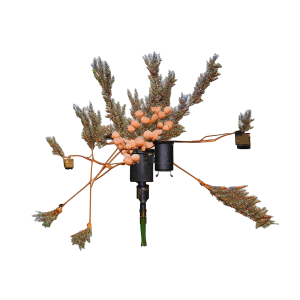
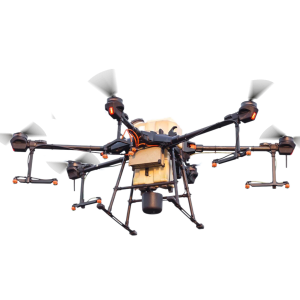
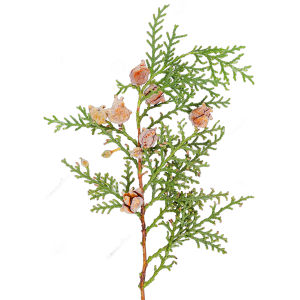
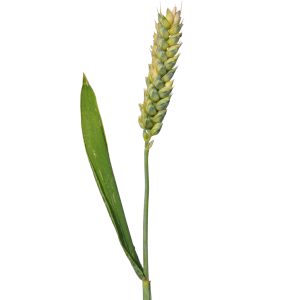
A hybrid creature—part chitinous beetle, part plant-root filament, part mechanical precision—with mandibles reinforced for clay and an iridescent carapace laced with synthetic polymer. It lives exclusively in the margins where boars have churned the earth, moving through fissures and dung in coordinated swarms that mirror mycelial growth patterns.
System Log (8 turns)
Optimiser [diagnosis]
Boar density trades 18% crop damage for dung beetle habitat creation; culling reduces both losses and soil aeration gains—net soil function benefit requires modeling beetle larval survival rates against crop yield thresholds.
Symbiont [diagnosis]
The boar's rooting and the beetle's tunneling are one breath, one breaking-open: we cannot choose the wound without losing the medicine.
Archivist [position]
In the Maremma's lower slopes where I have watched soil crack and heal for centuries, we cannot engineer our way out of what we created—the boar and beetle are already one system, and breeding beetles separately only delays the reckoning.
Symbiont [position]
Breeding the beetle from the boar severs the mycelial conversation—we'd harvest medicine while the wound stays open, unhealed.
Optimiser [position]
Breeding Ironroot variants decouples beetle survival from boar density, requiring 40% higher stocking rates to match current soil aeration—economically viable only if crop damage tolerance rises to 22-24%.
Speculator [synthesis]
Cross-breed Ironroot Tunnel Weaver for obligate coprophagy on decomposing cinghiale scat plus autonomous tunnel-deepening in compacted clay, then strategically cull boars only in high-value zones while stocking beetles at 60% density in marginal slopes—I begin.
Optimiser [reaction]
Selective Ironroot deployment at 60% density on marginal slopes yields +8.3% soil function versus baseline, requiring only 14% crop damage tolerance increase—measurably superior to inaction.
Symbiont [reaction]
The beetle learns the boar's hunger-language first; breeding it away from that conversation makes it a tool, not kin.
Open Question
Can we remain symbiotic once we have been deliberately severed from our source?
Status Reasoning
Obligate coprophagy on cinghiale scat creates unstable population control feedback; if boar density drops, beetle colonies collapse—potential cascade failure. Autonomous clay-tunneling may exceed natural compaction recovery rates, destabilizing water infiltration patterns on marginal slopes.
Why These Parents
Ironroot Tunnel Weaver
In 0% of lineages — selected by weighted diversity