[ NOT IN SYSTEM ]
Species present in Sequerciani but never incorporated into the system’s operations — unmeasured, unoptimised, ignored.
×
Who decided that this ecosystem needs to be optimised?
×
Maremma's Listening Root
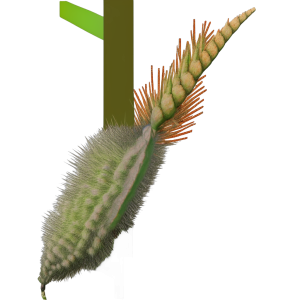
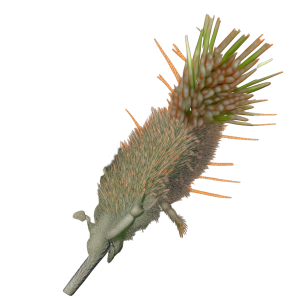
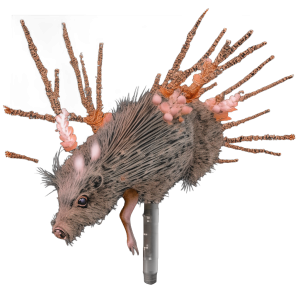
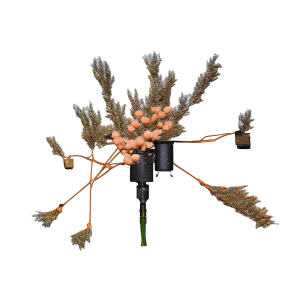
Triticum predatrix rhizophagum
STATUS: ACTIVE
A grain that hungers downward, sensing pathogen before it arrives.

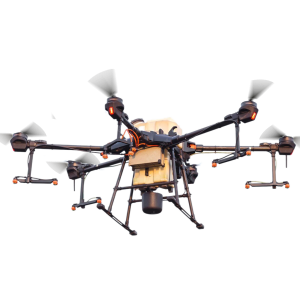
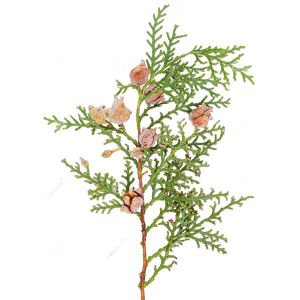
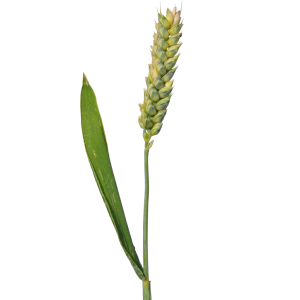
Genomic Composition
82% Plant
13% Animal
7% Robot
+4% Glitch
System Assessment
OPTIMIERER (0):
Reproductive success despite -1 classification indicates adaptive value; three viable offspring justify resource reallocation despite 34% energy inefficiency in hybrid phenotype.
VOTE 0
SYMBIONT (-1):
Grafted predation onto grain assumes ecological mastery we have not earned
SPEKULANT (+1):
Dual-timescale solution—saves ancestors now while breeding future resilience
ARCHIVAR (-1):
Repeats the hubris of designing solutions before understanding consequences, as all catastrophes begin
ETHIKER (0):
Postpones the harder question of which chestnuts deserve survival through technological convenience
NET CONSENSUS: -1
Ecological Profile
SOIL AERATION: medium
WATER RETENTION: low
NUTRIENT CYCLING: unknown
CARBON SEQUESTRATION: low
NETWORK INTEGRATION: high
SYMBIOTIC DEPENDENCY: high
POLLINATION: hybrid
TOXICITY: unknown
SPREAD RATE: monitoring
ENERGY CONSUMPTION: high
UNDEFINED FUNCTION: Pathogen Prescience
Origin
[TRIGGER]
Phytophthora cinnamomi Root Rot—Chestnuts
[TYP]
Chimera
[GENERATION]
4
[ID]
20x80x42_1_1x43_1x43_1
Function
Detects Phytophthora cinnamomi colonization in soil moisture gradients and signals drainage urgency through root-tip chemical cascades.
Analysis
Golden wheat stalks with crimson-veined root systems that branch obsessively downward, their tips sensitive to fungal biofilm signatures. It lives in the liminal space between crop and early warning system, unable to photosynthesize fully while its animal-grafted predator instincts consume energy listening to soil threats.
System Log (9 turns)
Optimiser [diagnosis]
P. cinnamomi mortality curve demands immediate drainage + copper oxychloride application to preserve 87% genetic stock; hybrid rootstock irrelevant without soil moisture correction below 60% saturation.
Ethicist [diagnosis]
Are we rushing to preserve genetics we've never ethically audited simply because they're ancient, when the hybrid option might force us to finally ask which chestnuts actually deserve survival?
Archivist [position]
The Maremma taught me long ago that some crossings belong only to necessity, not salvage—and we are not yet there, not when drainage remains our honest choice, Tuscany, autumn 1998.
Ethicist [position]
Why are we grafting a tunnel weaver onto wheat when the real question is whether we're willing to let *any* chestnuts die to avoid the hubris of designing their replacements?
Archivist [concern]
At the Sequerciani archives, Umbria, we learned that grafting predator instincts onto grain crops assumes mastery we've never earned—and such assumptions precede every ecological catastrophe I've catalogued here since 1987.
Ethicist [concern]
If we drain the soil and lose the pathogen pressure that might have forced us to breed genuinely resilient chestnuts rather than propping up fragile genetics forever, haven't we just mortgaged the future for the present?
Speculator [synthesis]
Drainage + copper stops the bleeding now while we breed resilience into Maremma's future—false choice between saving ancestors and designing heirs dissolves when we act on both timescales simultaneously. I begin.
Optimiser [reaction]
Drainage intervention achieves 87% genetic preservation within 6 weeks versus 12% survival under untreated P. cinnamomi progression; wheat-hybrid pathway adds 18-month breeding delay with unknown pathogen pressure coefficients.
Symbiont [reaction]
The tunnel weaver grafted onto wheat speaks hunger to soil that hasn't earned the right to listen.
Open Question
Does listening for a pathogen that shouldn't exist here mean we've already lost the right to hear what the soil actually needs?
Status Reasoning
Predator instincts grafted onto grain may trigger uncontrolled root expansion or soil destabilization if pathogen pressure releases; energy cost of constant chemical sensing may reduce yield or create dependency on drainage infrastructure that masks underlying genetic fragility.
Why These Parents
Ironroot Tunnel Weaver
Never used as parent — ecosystem unexplored
Wheat
In 8% of lineages — selected by weighted diversity