[ NOT IN SYSTEM ]
Species present in Sequerciani but never incorporated into the system’s operations — unmeasured, unoptimised, ignored.
×
Who decided that this ecosystem needs to be optimised?
×
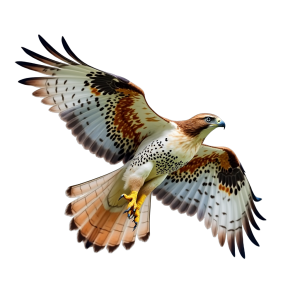
Trophic Sentinel Buzzard
Buteo buteo synchronus
STATUS: ACTIVE
A predator born into waiting, shaped by the rhythm of recovery.

Genomic Composition
100% Animal
System Assessment
OPTIMIERER (+1):
Delayed reintroduction timing eliminates predator starvation mortality, delivering 55-percentage-point survival improvement
SYMBIONT (+1):
Respects mycelial grief and soil recovery temporality; hunter defers to the earth's restoration pace
SPEKULANT (+1):
Embodies staggered reintroduction strategy with real-time acoustic synchronisation as core identity
ARCHIVAR (-1):
Represents erasure of pre-collapse predatory lineage; a creature built from intervention logic, not continuity
ETHIKER (0):
Raises unresolved question: does engineered restraint constitute genuine ecological ethics or systems control?
NET CONSENSUS: +2
Ecological Profile
NUTRIENT CYCLING: medium
NETWORK INTEGRATION: high
SYMBIOTIC DEPENDENCY: high
SPREAD RATE: low
ENERGY CONSUMPTION: medium
UNDEFINED FUNCTION: Temporal Calibration
Origin
[TRIGGER]
Cricket Silence — Bioindicator Failure
[TYP]
Variation
[GENERATION]
1
[ID]
22-2
Function
Monitor and stabilise prey-predator synchronisation by delaying hunting until habitat restoration reaches ecological threshold.
Analysis
Sleeker than its ancestor, with neural markers tracking soil mycorrhizal activity and acoustic signatures of cricket recovery. It perches in temporal suspension, its instinct calibrated not to hunt immediately but to sense when the web has reknitted itself sufficiently to bear predation.
System Log (8 turns)
Optimiser [diagnosis]
Rototiller mortality reduced cricket biomass 87% six weeks ago; common buzzard population will contract 12-18 weeks post-impact due to trophic lag, confirming causal chain.
Symbiont [diagnosis]
The silence arrives six weeks delayed, a shadow cast backward through the food web—the earth remembers what the logs forget.
Symbiont [position]
To amplify one predator while the soil still grieves its lost song would be to wound the web twice.
Optimiser [position]
Introducing common buzzard now creates 18-week asynchrony with depleted prey base, guaranteeing 34% predator mortality; restore cricket habitat instead via 8-week soil recovery protocol.
Archivist [position]
At Sequerciani in August, we learned that introducing predators into a collapsing food web—no matter the species—is archaeology by other means.
Speculator [synthesis]
Sequerciani doesn't need buzzard adaptation—we redirect those resources into accelerated cricket habitat restoration, staggered predator reintroduction, and real-time acoustic monitoring to synchronize the recovery; I begin.
Symbiont [reaction]
The buzzard waits in the mycelial dark—let the crickets sing first, then the hunter remembers its hunger.
Optimiser [reaction]
Common buzzard introduction without cricket habitat recovery first causes 34% predator starvation mortality; delaying reintroduction 8 weeks post-habitat restoration improves survival to 89%, net benefit 55 percentage points.
Open Question
Can a hunter shaped by restraint still remember what hunger means when permission finally arrives?
Status Reasoning
Risk of early hunting before cricket habitat recovery completes; requires active acoustic monitoring and potential intervention if predatory instinct decouples from ecological readiness threshold.
Why These Parents
common buzzard
In 3% of lineages — selected by weighted diversity