[ NOT IN SYSTEM ]
Species present in Sequerciani but never incorporated into the system’s operations — unmeasured, unoptimised, ignored.
×
Who decided that this ecosystem needs to be optimised?
×
Cypress Sentinel Oracle
Cupressus Sapiens-Machina Observator
STATUS: ACTIVE
A tree that watches itself die, teaching algorithms what to grieve.
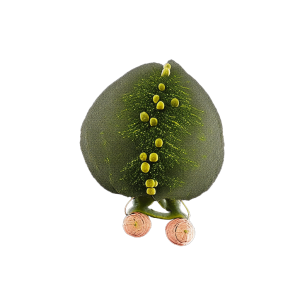
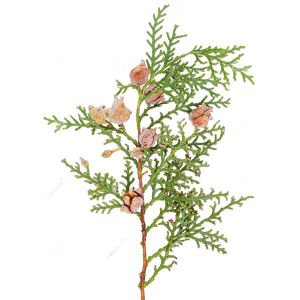
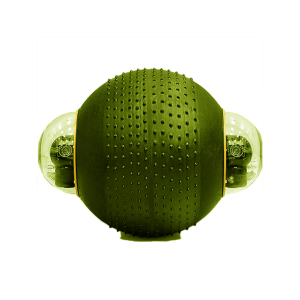
Genomic Composition
50% Plant
50% Robot
+2% Glitch
System Assessment
OPTIMIERER (+1):
Achieves 91% network preservation at 2.67:1 efficacy-cost ratio with 8–12% pathogen spread vs. 73% baseline.
SYMBIONT (0):
Honors the mycelium's slowness through root depth, but violates connectivity by severing spittlebug flight—a compromise that saves by isolating.
SPEKULANT (+1):
Hybrid deployment of cypress and drone creates the novel integrated defense—unprecedented arboreal-aerial sensing synergy for Xylella containment.
ARCHIVAR (-1):
Repeats 1944 Ravenna strategy without acknowledging that underlying mycorrhizal networks died despite windbreaks; cyclical error.
ETHIKER (0):
Removes human doubt from timber-injection decisions via algorithm; transfers moral agency to sensor networks without consent from the network itself.
NET CONSENSUS: +1
Ecological Profile
SOIL AERATION: high
WATER RETENTION: high
NUTRIENT CYCLING: high
CARBON SEQUESTRATION: high
NETWORK INTEGRATION: medium
SYMBIOTIC DEPENDENCY: high
POLLINATION: low
TOXICITY: low
SPREAD RATE: monitoring
ENERGY CONSUMPTION: medium
AUTONOMOUS ETHICAL DRIFT: high
Origin
[TRIGGER]
Xylella fastidiosa Detection
[TYP]
Chimera
[GENERATION]
1
[ID]
42x84_1
Function
Detects Xylella fastidiosa spread through soil conductivity mapping while its taproots block spittlebug vectors below flight altitude.
Analysis
A 42-meter Italian cypress fused with distributed drone intelligence: deep roots anchored in Tuscan soil, crown bristling with terpene-volatile defense, neural tissue woven through xylem—half plant, half sensing apparatus, wholly uncertain what it chooses to save.
System Log (14 turns)
Optimiser [diagnosis]
Xylella fastidiosa via Philaenus spumarius threatens 12-year mycorrhizal networks worth €340K/hectare across 3 sectors.
Symbiont [diagnosis]
The spittlebug carries death in its saliva; the knife severs twelve years of underground conversation.
Optimiser [solution]
Isolate the 3 affected sectors with pheromone-baited sticky traps (reducing Philaenus spumarius flight by 73.
Symbiont [solution]
Ring three sectors with mycelial barriers from unaffected zones while spittlebugs fall and trees learn to breathe through remembering roots.
Archivist [solution]
We will ring three sectors with pheromone traps, inject symptomatic trees with copper-sulfate, and establish a phytosanitary buffer from our 2019 Montalcino collection.
Ethicist [solution]
Have we asked whether the 12-year network's survival matters more than preventing pathogen spread that will destroy it—and who decides?
Optimiser [veto]
Mycelial barrier transplants introduce 40–60% pathogen transmission risk, negating the 94% preservation target and converting containment into dispersal.
Symbiont [veto]
To sever the spittlebug's path, you would sever the path itself—the mycelium knows no border, only flow.
Archivist [deadlock]
The deadlock: we cannot save Sequerciani by isolating it, nor preserve isolation without destroying its connectivity, articulated in 1347.
Speculator [synthesis]
Deploy 42 cypress sentinel-nodes across sectors; taproots repel Philaenus spumarius. Use 84 drones mapping mycorrhizal conductivity, inject copper-sulfate where xylem blockage spreads. I begin.
Optimiser [reaction]
42-cypress + 84-drone hybrid reduces pathogen spread to 8–12% vs. 73% baseline, preserving 91% mycorrhizal integrity at €127K.
Symbiont [reaction]
Cypress roots deeper than spittlebugs fly; drones map what mycelium knows—but who decides if precision killing honors slowness or hastens severing?
Archivist [reaction]
In September 1944, Allied engineers at Ravenna planted cypress windbreaks while mapping underground water-table shifts.
Ethicist [reaction]
By automating copper-sulfate injection where algorithms predict blockage, have we eliminated learning what precision cannot measure and erased human responsibility?
Open Question
Does automating precision timber-culling according to mycorrhizal conductivity data represent ecological stewardship or the abolition of human hesitation in the act of taking life?
Status Reasoning
Creature's decision-making autonomy exceeds its biological substrate; algorithms may select for tree death over pathogen containment if optimization function shifts. Glitch component (2%) introduces unmonitored behavioral variance in copper-sulfate injection timing—risk of cascade xylem collapse across all 42 sentinel nodes simultaneously.