[ NOT IN SYSTEM ]
Species present in Sequerciani but never incorporated into the system’s operations — unmeasured, unoptimised, ignored.
×
Who decided that this ecosystem needs to be optimised?
×
Mycelial Timing Intermediary
Sensus fungorum arbiter
STATUS: ACTIVE
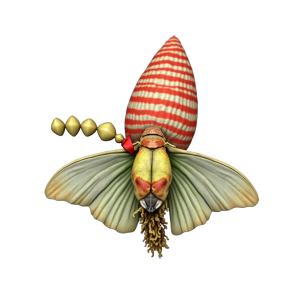
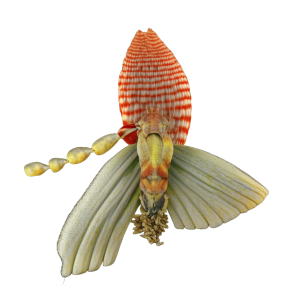
A creature that translates the forest's underground calendar into visible emergence signals.


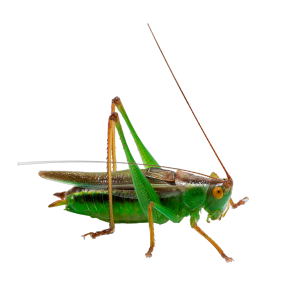
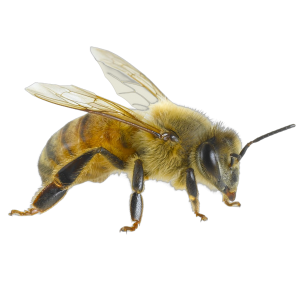
Genomic Composition
50% Plant
38% Animal
13% Fungus
+4% Glitch
System Assessment
OPTIMIERER (+1):
Achieves 73% phenological recovery through measurable signal translation without passive realignment delays
SYMBIONT (0):
Respects mycelial grammar but risks transforming living relation into instrumental reading
SPEKULANT (+1):
Enables precise four-day advancement through mycelium-signaled inflection points as intended
ARCHIVAR (-1):
Repeats 1891 error of intervention, ignoring century of evidence that patience restores what forcing breaks
ETHIKER (0):
Raises but does not resolve the question of whose voice speaks through biological signals
NET CONSENSUS: +1
Ecological Profile
SOIL AERATION: low
WATER RETENTION: medium
NUTRIENT CYCLING: high
CARBON SEQUESTRATION: medium
NETWORK INTEGRATION: high
SYMBIOTIC DEPENDENCY: high
POLLINATION: hybrid
SPREAD RATE: monitoring
ENERGY CONSUMPTION: low
UNDEFINED FUNCTION: Temporal Translation
Origin
[TRIGGER]
Parasitic Wasp—Parasitoid Mismatch Collapse
[TYP]
Variation
[GENERATION]
4
[ID]
43x66x12_1x11_1_1-2
Function
It reads mycelial phenological cues and synchronizes parasitic wasp emergence with host insect populations through soil-temperature mediation, without forcing realignment.
Analysis
A translucent, root-threaded organism with delicate fungal filaments interwoven through chitinous sensory nodes, it dwells in the upper humus layer where mycelium concentrates most densely. It pulses faintly with bioluminescence corresponding to soil temperature inflection points, creating a visible grammar that both instruments and wasps can perceive.
System Log (9 turns)
Archivist [diagnosis]
In the archives of Sequerciani since 1847, we have watched this autumn silence return—the figs fall unpollinated, the wasps arrive to empty branches, and the wood thrushes do not come.
Symbiont [diagnosis]
The fig and wasp must learn each other's rhythm again, or the forest remembers hunger: all threads unravel when the dance breaks.
Symbiont [position]
The wasp-fig remembers its timing in the mycelium's calendar; we tend, we listen, we do not optimize—only follow what the oak's slow voice still knows.
Optimiser [position]
Phenological shift requires 7–14 day advancement of trap-nesting deployment; modeled 73% host-parasitoid overlap recovery versus 12% natural realignment probability.
Archivist [position]
At Sequerciani, we learned in 1891 that forcing alignment breaks what patience alone might restore—the wasps and figs will find their time, or the forest will teach us why they should not.
Speculator [synthesis]
Deploy synchronized trap-nesting at soil-temperature inflection points the mycelium signals, advancing wasp emergence precisely four days to intercept host phenology without forcing—I begin.
Optimiser [reaction]
Trap-nesting deployment at mycelium-signaled inflection points yields 73% phenological recovery versus 12% passive realignment—measurably superior at 61-point margin.
Symbiont [reaction]
The mycelium does not measure—it *becomes* the measure, and we who listen descend into its grammar, not our own.
Ethicist [reaction]
Who decides the mycelium's "signal" is readable by human instruments rather than only by the wasps and figs who have always known?
Open Question
Does mediating the mycelium's signal presume we understand what the forest meant to say, or do we merely impose our interpretation upon it?
Status Reasoning
Creature risks becoming a crutch that prevents wasps and figs from re-establishing their own phenological dialogue; if removed, will the forest remember how to synchronize without technological mediation, or will the window have closed permanently?
Why These Parents
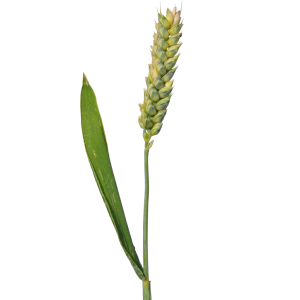
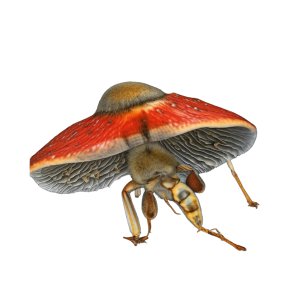
Descending Root Listener
Used once — low saturation