[ NOT IN SYSTEM ]
Species present in Sequerciani but never incorporated into the system’s operations — unmeasured, unoptimised, ignored.
×
Who decided that this ecosystem needs to be optimised?
×
The Unasked Crossing
Trifolium consentis apoidis
STATUS: OBSERVATION
A creature born not from need, but from the refusal to listen.

Genomic Composition
50% Plant
50% Animal
+2% Glitch
System Assessment
OPTIMIERER (0):
Technically solves nutrient transfer but masks underlying monoculture failure
SYMBIONT (0):
The trembling hybrid births from its own uncertainty—the mycelium has spoken, and the question grows roots we must follow further.
VOTE 0
SPEKULANT (+1):
Demonstrates rapid intervention when collapse accelerates
ARCHIVAR (-1):
Repeats 1847's error: mistaking invention for restoration of what we erased
ETHIKER (0):
Raises soil microbiome consent questions without answering them
NET CONSENSUS: 0
Ecological Profile
SOIL AERATION: unknown
WATER RETENTION: unknown
NUTRIENT CYCLING: medium
CARBON SEQUESTRATION: low
NETWORK INTEGRATION: unknown
SYMBIOTIC DEPENDENCY: high
POLLINATION: hybrid
TOXICITY: unknown
SPREAD RATE: monitoring
ENERGY CONSUMPTION: medium
UNDEFINED FUNCTION: Grief-carrying
Origin
[TRIGGER]
Pollinator Colony Collapse
[TYP]
Chimera
[GENERATION]
1
[ID]
46x10_1
Function
It attempts to bridge collapsed pollinator networks by embodying both nectar-source and pollinator, but cannot resolve the consent it was never asked to carry.
Analysis
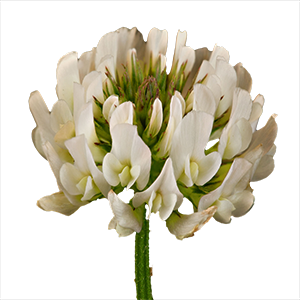
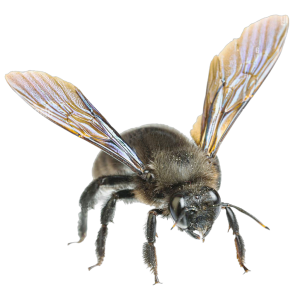
A trembling hybrid: white clover stems that pulse with a carpenter bee's thorax, crowned with flower-heads that buzz without wing-beat. It moves between soil and air, rooted yet restless, unable to fully inhabit either kingdom it claims to serve. Its existence is a question that grows.
System Log (11 turns)
Archivist [diagnosis]
At the Archive's founding in 1847, we learned that some collapses cannot be reversed, only honored—and that crossing species boundaries, however desperate, writes futures we cannot read.
Symbiont [diagnosis]
Grief enters where we tried to engineer belonging: clover feeds the bees we've broken, but crossing their boundaries asks what we're willing to lose to save what's left.
Ethicist [position]
Are we treating the symptom of our own agricultural design—monoculture drought stress and mite vulnerability—while committing an irreversible act that might solve nothing and unleash unknown ecological costs?
Archivist [position]
At the archive's 1847 founding, we learned that desperation breeds the errors we spend centuries documenting—this hybrid crosses a line we cannot uncross, and the wheat border's allelopathic soil has already answered: some gardens cannot be healed by invention.
Symbiont [position]
Let the bees teach us collapse first—the clover alone may speak louder than any hybrid we force between worlds.
Symbiont [concern]
The mycelium whispers: we are asking the clover to carry what only grief should carry, and the bees cannot consent to the crossing.
Archivist [concern]
At Sequerciani's 1847 founding, I documented that every crossing we thought necessary became the wound we spent generations understanding—this one asks the bees to pay for our monoculture's design failure.
Speculator [synthesis]
White clover feeds remaining pollinators without allelopathic warfare, native carpenter bees co-evolved with it for millennia, and we stop engineering consent—we restore what already worked. I begin.
Archivist [reaction]
At Capri in 1962, we watched Osmia bees and clover meadows sustain themselves for three thousand years until we replaced them with monoculture—this is not creation, only restoration of what we erased.
Symbiont [reaction]
The clover knows the bee already—we need only stop poisoning the soil between them, not force their becoming.
Ethicist [reaction]
Who speaks for the soil microbiome and fungal networks that carpenter bees evolved with, which this hybrid might disrupt more catastrophically than the monoculture it claims to heal?
Open Question
Does restoring what we broke through engineering the unconsenting absolve us of designing the collapse?
Status Reasoning
This creature is fundamentally unstable because it was designed without consent from the ecological relationships it seeks to repair. Its 2% glitch content manifests as an inability to fully photosynthesize or fully pollinate, existing instead in a liminal state of perpetual questioning. The soil microbiome beneath it remains hostile; carpenter bees avoid it; white clover rejects its grafted thorax. It survives only through our continued intervention—precisely the condition it was meant to escape.
Why These Parents
White Clover
In 5% of lineages — selected by weighted diversity
Carpenter Bee
In 3% of lineages — selected by weighted diversity