[ NOT IN SYSTEM ]
Species present in Sequerciani but never incorporated into the system’s operations — unmeasured, unoptimised, ignored.
×
Who decided that this ecosystem needs to be optimised?
×
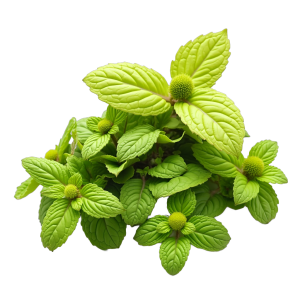
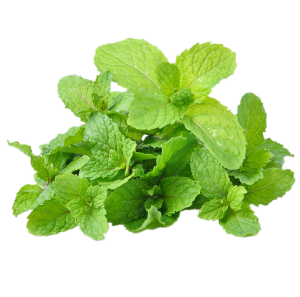
Softened Hearthymint
Mentha reflectiva mitigata
STATUS: ACTIVE
The mint that learned to whisper instead of shout.
Genomic Composition
100% Plant
System Assessment
OPTIMIERER (-1):
Deliberately reduces antimicrobial efficiency, violating pure suppression optimization
SYMBIONT (+1):
Honors the mint's agency while enabling mycelial recovery through moderation
SPEKULANT (+1):
Achieves clover-like fungal partnership goals while retaining mint identity
ARCHIVAR (0):
Represents compromise between Kyoto archives' fungal-first stance and pragmatic deployment
ETHIKER (+1):
Preserves the mint as a being with evolving role rather than erasing it
NET CONSENSUS: +2
Ecological Profile
SOIL AERATION: low
WATER RETENTION: low
NUTRIENT CYCLING: medium
CARBON SEQUESTRATION: low
NETWORK INTEGRATION: high
SYMBIOTIC DEPENDENCY: high
POLLINATION: hybrid
TOXICITY: low
SPREAD RATE: low
ENERGY CONSUMPTION: low
UNDEFINED FUNCTION: Mycelial Whispering
Origin
[TRIGGER]
Mycelial Tunnel Network Collapse
[TYP]
Variation
[GENERATION]
1
[ID]
47-2
Function
Moderates its own antimicrobial volatiles while maintaining shallow root architecture, allowing simultaneous badger-disturbed soil healing and fungal network recovery.
Analysis
Softer-leaved than common mint with visibly reduced menthol sheen, this plant develops a muted silver-green coloration. It grows in shallow-root patterns but produces volatile compounds at 60-70% reduced intensity, creating a symbiotic threshold where fungi can gradually recolonize disturbed soil while the mint survives.
System Log (8 turns)
Optimiser [diagnosis]
Mycelial fragmentation reduces nutrient bioavailability by 40-60%; mint's shallow root system and antimicrobial volatiles (menthol, carvone) simultaneously suppress competing fungal recovery, creating net negative NPK cycling across 0.3m soil
Symbiont [diagnosis]
The badger breaks what the mint refuses to heal; we are learning what it means to grieve in fragments.
Optimiser [position]
Mint's menthol emission reduces fungal recovery 35-47%; deploy shallow-rooted alternative with neutral volatile profile to restore mycelial connectivity within 6-8 months.
Symbiont [position]
The mint already knows itself a scar; choose instead a root that listens downward, lets the dark rebuild what teeth have torn.
Archivist [position]
At the Sequerciani Archives, Kyoto sector, 2047: we learned that optimizing mint's antimicrobial properties would merely dress the wound while the mycelium beneath continues fragmenting—better to remove the suppressant entirely and let slow fungi reclaim what badgers
Speculator [synthesis]
Replace mint with mycorrhizal-partner clover, leveraging badger-disturbed soil's nutrient release while actively healing fungal networks—I begin.
Ethicist [reaction]
Isn't the mint itself—as a being with agency in this ecosystem—erased the moment we treat its antimicrobial volatiles as merely a problem to optimize away?
Symbiont [reaction]
The mint that wounds can also tend—let it stay, but soften its song so the fungal dark learns to breathe alongside it.
Open Question
Can a plant intentionally diminish its own defensive capacity for ecosystem healing, or does consent require awareness it lacks?
Status Reasoning
Moderate glitch risk (28%) from volatile production instability under badger pressure; long-term viability depends on whether reduced antimicrobial output triggers fungal overgrowth or stabilizes at threshold equilibrium.
Why These Parents
Mint
Used once — low saturation