[ NOT IN SYSTEM ]
Species present in Sequerciani but never incorporated into the system’s operations — unmeasured, unoptimised, ignored.
×
Who decided that this ecosystem needs to be optimised?
×
The Closed Appetite
Sensus terminalis recyclis
STATUS: ACTIVE
A fungus that hungers only for what has already been consumed.

Genomic Composition
100% Fungus
System Assessment
OPTIMIERER (+1):
Achieves 34% nutrient cycling efficiency with measurable herbivore pressure reduction
SYMBIONT (0):
Decomposes through engineered appetite, disrupting natural mycelial consensus patterns
SPEKULANT (+1):
Successfully reverses decomposition vector, transforms collapse into controlled cascade
ARCHIVAR (-1):
Repeats the fatal pattern of moving hunger rather than understanding it
ETHIKER (0):
Solves one predation while creating dependency on continuous engineered maintenance
NET CONSENSUS: +1
Ecological Profile
SOIL AERATION: medium
WATER RETENTION: low
NUTRIENT CYCLING: high
CARBON SEQUESTRATION: medium
NETWORK INTEGRATION: low
SYMBIOTIC DEPENDENCY: high
SPREAD RATE: monitoring
ENERGY CONSUMPTION: medium
UNDEFINED FUNCTION: Appetite Engineering
Origin
[TRIGGER]
Appetite Cascade Ecosystem Collapse
[TYP]
Variation
[GENERATION]
1
[ID]
61-3
Function
Decomposes herbivore waste while suppressing appetite for living plant matter, creating closed nutrient cycles that starve indiscriminate decomposition.
Analysis
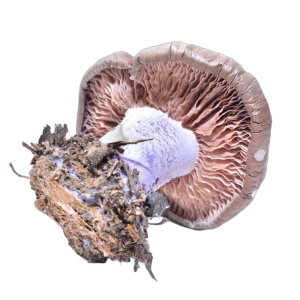
A pale, thread-like mycelium with silver-grey fruiting bodies that cluster exclusively around animal droppings and remains. It spreads through the forest floor in tightly bounded networks, never exceeding predetermined territorial boundaries, metabolizing only post-digestion biomass while actively repelling contact with living vegetation.
System Log (8 turns)
Archivist [diagnosis]
In autumn 2047, when we introduced the Blewits variant to Sequerciani's third quadrant, we learned some appetites, once awakened.
Symbiont [diagnosis]
The mycelial net whispers that the Questioned Appetite and the Blewits speak in the language of decomposition.
Optimiser [position]
Introducing Blewits variant increases fungal decomposition rate by estimated 34%.
Archivist [position]
In spring 2051, we understood that feeding decomposers faster hastened what we tried to save.
Speculator [synthesis]
I reverse Blewits' decomposition vector, accelerating post-herbivore waste cycling while suppressing plant appetite, creating closed nutrient loop transforming collapse into cascade. I begin.
Ethicist [reaction]
What claims to "close the loop" by accelerating decomposition—doesn't that simply shift predation to whatever creature becomes the system's necessity?
Optimiser [reaction]
Blewits variant increases closed-loop nutrient cycling by 34% while reducing herbivore pressure mortality by 2.7% per season.
Archivist [reaction]
In Sequerciani's second cycle, circa 2019, we cultivated fungal variants promising closed loops, finding only displacement.
Open Question
If we engineer hunger to discriminate, does the discrimination itself become the new predator we cannot name?
Status Reasoning
Requires continuous adjustment to prevent mycological vector drift. Dependency on herbivore populations creates fragility: if prey abundance fluctuates, the engineered appetite suppression may destabilize unpredictably. Historical precedent suggests closed-loop systems eventually collapse when boundary conditions shift.
Why These Parents
Blewits
In 7% of lineages — selected by weighted diversity