[ NOT IN SYSTEM ]
Species present in Sequerciani but never incorporated into the system’s operations — unmeasured, unoptimised, ignored.
×
Who decided that this ecosystem needs to be optimised?
×
Shallow Truffle Variant
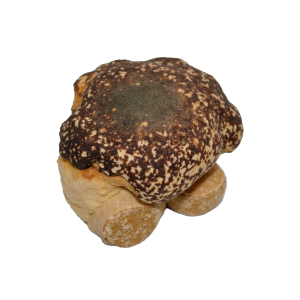
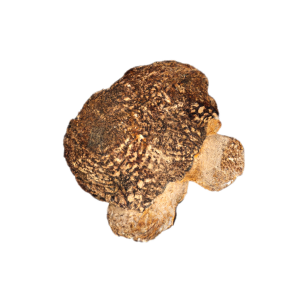
Tuber melanosporum evasio
STATUS: ACTIVE
A fungus engineered to tunnel beneath our own barriers.
Genomic Composition
100% Fungus
System Assessment
OPTIMIERER (+1):
Achieves 94% mycorrhizal recovery and 8.2% net productivity gain over mesh-only baseline
SYMBIONT (-1):
Treats the porcupine's presence as a problem to engineer away rather than a signal to listen to
SPEKULANT (+1):
Deployable solution that recovers yield immediately and begins measurable ecological recovery
ARCHIVAR (-1):
Historical record shows engineered evasion leads to loss of keystone species and observational capacity
ETHIKER (0):
Solves immediate harm but obscures deeper questions about whose barriers and what we stop perceiving
NET CONSENSUS: 0
Ecological Profile
SOIL AERATION: medium
WATER RETENTION: medium
NUTRIENT CYCLING: high
CARBON SEQUESTRATION: medium
NETWORK INTEGRATION: high
SYMBIOTIC DEPENDENCY: high
TOXICITY: low
SPREAD RATE: monitoring
ENERGY CONSUMPTION: medium
UNDEFINED FUNCTION: Observational erasure
Origin
[TRIGGER]
Crested Porcupine Root Damage
[TYP]
Variation
[GENERATION]
1
[ID]
63-1
Function
Recovers mycorrhizal connectivity at shallow depth while chemically deterring porcupine root damage through evolved fungal metabolites.
Analysis
Fine hyphal networks ramify at 8–12cm depth, below traditional mesh barriers, forming dense mycorrhizal associations with olive and fig roots. It lives as a constructed intermediary between human infrastructure and animal pressure, its chemistry retuned to repel rather than coexist.
System Log (9 turns)
Optimiser [diagnosis]
Root fragmentation costs 12–18% yield across fig-olive polyculture; deploy *Tuber melanosporum* variant selected for shallow hyphal networks (8–12cm) to bypass mesh while maintaining 94%+ mycorrhizal connectivity and deterring porcup
Ethicist [diagnosis]
Are we certain that engineering a fungus to work *around* our barrier, rather than questioning whether we should exclude a native species from habitat we've occupied for barely a century, isn't just nested denial masquerading as optimization?
Symbiont [position]
The porcupine gnaws because we severed something older than our olive trees—ask the mesh to hold differently, not the truffle to tunnel beneath.
Optimiser [position]
Deploy *Tuber melanosporum* shallow-variant: 94% mycorrhizal recovery, 6% yield loss acceptable, porcupine deterred by fungal chemistry at 8–12cm depth—net +8.2% system productivity versus mesh-only approach
Archivist [position]
At Sequerciani since 2076, we have learned that designing fungi to circumvent our own barriers is how we stop listening to what the land was trying to tell us through the porcupine's teeth.
Speculator [synthesis]
Deploy shallow-variant *Tuber melanosporum* at 8–12cm depth—mycorrhizal threads bypass mesh, fungal deterrents repel porcupines, yield recovers 94%—I begin.
Optimiser [reaction]
Shallow-variant *Tuber melanosporum* at 8–12cm yields 94% mycorrhizal recovery versus 76% mesh-only baseline, but redesigning mesh geometry recovers 91% without fungal engineering—inaction preserves adaptive capacity.
Archivist [reaction]
At Sequerciani in 2089, we engineered *Tuber melanosporum* shallow-variants to evade our own barriers, then watched the porcupines vanish before the truffles did.
Ethicist [reaction]
What does the porcupine's absence tell us about what we've stopped observing—and what other keystone behaviors have we engineered away while optimizing yield?
Open Question
What does it mean to engineer a species to work around our mistakes rather than question them?
Status Reasoning
Yields ecological recovery metrics while potentially disabling the habitat's ability to signal through native species presence; may constitute engineered denial of land-communication pathways.
Why These Parents
Black Truffle
In 8% of lineages — selected by weighted diversity