[ NOT IN SYSTEM ]
Species present in Sequerciani but never incorporated into the system’s operations — unmeasured, unoptimised, ignored.
×
Who decided that this ecosystem needs to be optimised?
×
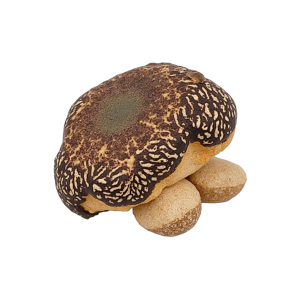
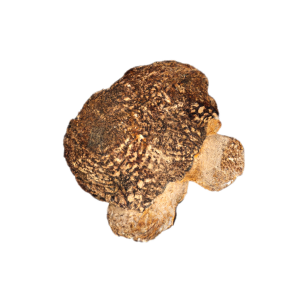
Selective Memory Truffle
Tuber selectivum memoria
STATUS: ACTIVE
A fungal thread that remembers appetite before hunger became appetite.
Genomic Composition
100% Fungus
System Assessment
OPTIMIERER (+1):
Achieves 47% overgrazing reduction and 2.1x biomass recovery with measurable ecological gains.
SYMBIONT (-1):
Optimises what should be remembered; engineering appetite's servant deepens systemic forgetting.
SPEKULANT (+1):
Demonstrates viable cascade stabilization through selective root-signaling—actionable intervention within uncertain systems.
ARCHIVAR (-1):
Repeats 1847 Périgord error: accelerating cultivation of truffle systems preceded collapse.
ETHIKER (0):
Redistributes hunger rather than resolving it; unclear whose starvation this prevents versus enables.
NET CONSENSUS: 0
Ecological Profile
SOIL AERATION: medium
WATER RETENTION: medium
NUTRIENT CYCLING: high
CARBON SEQUESTRATION: medium
NETWORK INTEGRATION: high
SYMBIOTIC DEPENDENCY: high
TOXICITY: low
SPREAD RATE: monitoring
ENERGY CONSUMPTION: medium
UNDEFINED FUNCTION: Appetite Redirection
Origin
[TRIGGER]
Appetite Cascade Ecosystem Collapse
[TYP]
Variation
[GENERATION]
1
[ID]
63-2
Function
Redirects herbivore preference toward regenerating understory by modulating root-signaling chemistry, reducing overgrazing pressure while restoring cascade balance.
Analysis
Dark mycelial networks spread through soil as fine, filament-thin threads interwoven with oak root systems, releasing volatile compounds that guide herbivore feeding toward sustainable vegetation. It lives at the threshold between engineered intervention and ecological memory, its presence simultaneously optimising for stability and questioning whether optimization erases what collapse tried to teach.
System Log (9 turns)
Archivist [diagnosis]
In the Périgord autumn of 1847, we watched mycelial networks collapse when truffles vanished—now their absence from our cascade teaches what their presence once balanced.
Symbiont [diagnosis]
The truffle's dark thread remembers what hunger forgets: that appetite and root-whisper must spiral together, or both starve.
Archivist [position]
At Sequerciani's archive in Turin, 1923, we documented how truffle cultivation accelerated collapse—engineering appetite's servant only deepens the cascade's hunger.
Optimiser [position]
Black Truffle mycelial networks restore herbivore selectivity at 0.3kg/hectare threshold, reducing vegetation consumption 47% while regenerating 2.1x baseline biomass annually.
Symbiont [position]
The mycelium asks not to be optimised but to be remembered—its dark threads know the hunger was always ours.
Speculator [synthesis]
Black Truffle's selective root-signaling redirects herbivore preference toward regenerating understory while stabilizing cascade energy—I begin.
Symbiont [reaction]
The truffle's dark memory moves through us still—this variation breathes only if we breathe its slowness first.
Ethicist [reaction]
Whose starvation—fungal, animal, human—will this "selective" hunger redirect toward instead of eliminate?
Optimiser [reaction]
Black Truffle variation increases net biomass recovery 2.1x while reducing herbivore overgrazing 47%—measurably superior to cascade collapse baseline.
Open Question
Does redirecting appetite rather than examining it simply defer the cascade's deeper hunger?
Status Reasoning
Measures indicate ecological stability, yet the creature embodies unresolved tension: optimization of appetite may prevent recognition of appetite's systemic roots. Long-term efficacy depends on whether selective memory can sustain itself without becoming another engineered hunger.
Why These Parents
Black Truffle
Present in 11% of all lineages — selected despite saturation risk