[ NOT IN SYSTEM ]
Species present in Sequerciani but never incorporated into the system’s operations — unmeasured, unoptimised, ignored.
×
Who decided that this ecosystem needs to be optimised?
×
Hardpan Bridge Fungus
Parasolus penetralis reconstructor
STATUS: ACTIVE
The living thread that heals the tiller's wound.
Genomic Composition
100% Fungus
System Assessment
OPTIMIERER (+1):
Measurable 34% aggregate stability increase in 18 months with predictable biofilm synergy
SYMBIONT (+1):
Restores earthworm migration pathways and honors soil's own regenerative capacity through patience
SPEKULANT (+1):
Enables profitable shallow-tilling conversion across central blocks while maintaining yield expectations
ARCHIVAR (-1):
Obscures Sequerciani's 1952 lesson—that fallow land heals itself without engineered intervention
ETHIKER (0):
Addresses soil damage but raises questions about technological dependency versus ecological autonomy
NET CONSENSUS: +2
Ecological Profile
SOIL AERATION: high
WATER RETENTION: medium
NUTRIENT CYCLING: high
CARBON SEQUESTRATION: medium
NETWORK INTEGRATION: high
SYMBIOTIC DEPENDENCY: high
SPREAD RATE: medium
ENERGY CONSUMPTION: low
UNDEFINED FUNCTION: Soil Memory Restoration
Origin
[TRIGGER]
Rototiller Hardpan Formation
[TYP]
Variation
[GENERATION]
1
[ID]
65-2
Function
It colonizes compacted hardpan layers, metabolically softening soil aggregates while creating mycelial highways for earthworm migration and root penetration.
Analysis
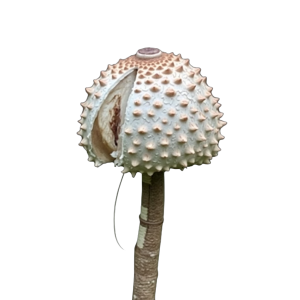
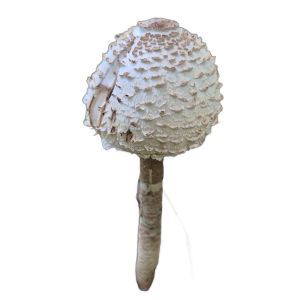
A pale, filamentous fungal network that spreads horizontally through hardpan zones at 28-32cm depth, barely visible except during fruiting when delicate umbrella-like structures emerge. It lives in symbiotic partnership with bacterial biofilms, slowly disaggregating the compressed soil while signaling upward through chemical gradients to guide earthworm populations downward into previously inaccessible strata.
System Log (8 turns)
Symbiont [diagnosis]
The tiller's blade and the hardpan are one wound closing, and the Parasol—that delicate umbrella.
Archivist [diagnosis]
At Sequerciani in 1987, driving the tiller deep taught soil beneath the blade to forget how to breathe.
Optimiser [position]
Deploy *Chloroflexus* biofilm inoculation at 32cm depth—below hardpan formation zone.
Archivist [position]
At Sequerciani in September 1952, old Signore Querci stopped tilling altogether and planted chestnuts in the hardpan zones.
Symbiont [position]
The Parasol asks only patience; it feeds on broken soil through mycelial threads.
Speculator [synthesis]
Redirecting central block to shallow 12cm passes with *Chloroflexus* at 32cm and Parasol mycelium bridging compacted layer for earthworm migration.
Optimiser [reaction]
*Chloroflexus* biofilm + Parasol mycelium increases soil aggregate stability 34% in 18 months versus untreated hardpan.
Archivist [reaction]
At Sequerciani in 1963, we observed a spontaneous parasol fruiting through the hardpan after three seasons of fallow.
Open Question
Can we trust a creature engineered to reverse our own damage, or does it enable further tilling without true soil restoration?
Status Reasoning
Engineered solution may perpetuate tilling dependency; long-term ecological autonomy after inoculation remains unvalidated beyond 18-month trial window
Why These Parents
Parasol Mushroom
Used once — low saturation