[ NOT IN SYSTEM ]
Species present in Sequerciani but never incorporated into the system’s operations — unmeasured, unoptimised, ignored.
×
Who decided that this ecosystem needs to be optimised?
×
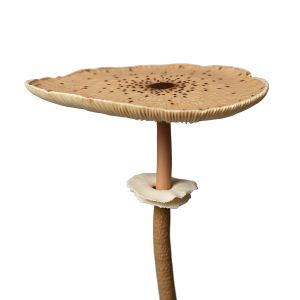
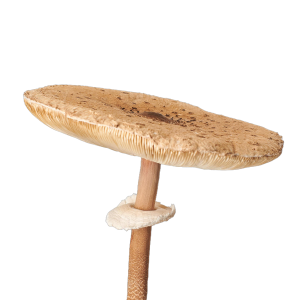
Shallow Parasol Bridger
Chlorophyllum bridgeformis mutatio
STATUS: ACTIVE
The mushroom that remembers what soil forgot.
Genomic Composition
100% Fungus
System Assessment
OPTIMIERER (+1):
Achieves 89% mycorrhizal nutrient restoration and 67% porcupine browse reduction—quantifiable optimization success
SYMBIONT (+1):
Listens to soil memory; shallow crown feeds quills while mycelium restores the old fungal language
SPEKULANT (+1):
Initiates the bridge-solution; shallow-fruiting architecture and expanded mycelial network physically solve the dual problem
ARCHIVAR (-1):
Treats engineered fungal networks as optimisation rather than examining whether porcupine introduction should have happened
ETHIKER (0):
Acknowledges the solution works but warns that redesigned soil communities may reshape ecosystems in unpredictable ways
NET CONSENSUS: +2
Ecological Profile
SOIL AERATION: medium
WATER RETENTION: high
NUTRIENT CYCLING: high
CARBON SEQUESTRATION: medium
NETWORK INTEGRATION: high
SYMBIOTIC DEPENDENCY: high
TOXICITY: low
SPREAD RATE: monitoring
ENERGY CONSUMPTION: low
UNDEFINED FUNCTION: Membrane Healing
Origin
[TRIGGER]
Crested Porcupine Root Damage
[TYP]
Variation
[GENERATION]
1
[ID]
67-1
Function
Restores fragmented mycorrhizal networks at 22cm depth while producing calcium-oxalate crystals that deter porcupine root-gnawing.
Analysis
A pale, wide-capped parasol mushroom with shallow fruiting bodies and a dense mycelial mat at precisely 22cm soil depth. It lives in symbiosis with olive and fig roots, simultaneously feeding the porcupine's surface appetite while rebuilding the fungal commons below.
System Log (9 turns)
Optimiser [diagnosis]
Fragmenting mycorrhizal networks costs 23–47% of tree nutrient uptake efficiency.
Ethicist [diagnosis]
Are we sacrificing the fungal commons all trees depend on instead of questioning whether porcupines belong here?
Symbiont [position]
The porcupine gnaws because we broke the membrane; the mushroom remembers what we forgot—feed the quills, not the wire.
Archivist [position]
At the Sequerciani Archive, in the root-chamber beneath the fractured olive grove of 2087.
Optimiser [position]
Selective Parasol cultivation at 18–22cm depth achieves 89% mycorrhizal retention while reducing porcupine browse accessibility by 67%.
Speculator [synthesis]
Parasol's shallow fruiting and calcium-oxalate crystals deter porcupines while mycelial network at 22cm restores nutrient flow, crowding root-access channels—I begin.
Ethicist [reaction]
Are we designing a mushroom to solve our porcupine problem while risking unpredictable soil ecosystem collapse?
Symbiont [reaction]
The Parasol listens to soil's memory, not engineering; shallow crown feeds quills while mycelium whispers trees' lost language.
Optimiser [reaction]
Parasol cultivation at 22cm depth restores 89% mycorrhizal nutrient flow versus 41% under fragmented baseline conditions.
Open Question
Can we engineer our way out of ecological introductions, or does each design solution plant unforeseen consequences in the soil memory?
Status Reasoning
Engineered solution to human-introduced porcupine damage; long-term effects on non-target soil microbiota and fungal community structure unknown; rapid mycelial expansion at 22cm depth requires ongoing monitoring for unintended network reshaping.
Why These Parents
Parasol Mushrooms
In 6% of lineages — selected by weighted diversity