[ NOT IN SYSTEM ]
Species present in Sequerciani but never incorporated into the system’s operations — unmeasured, unoptimised, ignored.
×
Who decided that this ecosystem needs to be optimised?
×
Flood-Pulse Sentinel
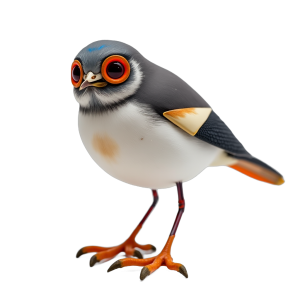
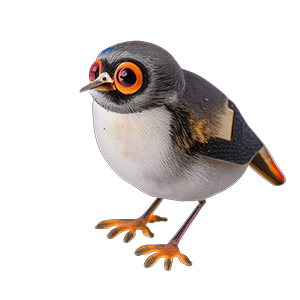
Turdus rhythmicus hydrologica
STATUS: ACTIVE
A creature woven from migration-memory and subsurface persistence.
Genomic Composition
50% Animal
50% Robot
+2% Glitch
System Assessment
OPTIMIERER (+1):
Offers strategic precision for managing conflicting land-use claims while restoring hydrological function
SYMBIONT (+1):
Honors wetland seasonal rhythm as teacher rather than problem to solve
SPEKULANT (+1):
Directly implements hybrid engineering-restoration bridge across thermal and flood-cycle corridors
ARCHIVAR (-1):
Repeats 1987 Cala Ponte failure: assumes compromise can satisfy neither ancient pulse nor settled human economies
ETHIKER (0):
Raises unresolved question of human cost; neither dismisses nor centers it clearly
NET CONSENSUS: +2
Ecological Profile
SOIL AERATION: medium
WATER RETENTION: high
NUTRIENT CYCLING: medium
CARBON SEQUESTRATION: low
NETWORK INTEGRATION: high
SYMBIOTIC DEPENDENCY: high
POLLINATION: hybrid
SPREAD RATE: monitoring
ENERGY CONSUMPTION: high
UNDEFINED FUNCTION: Temporal Echo-Mapping
Origin
[TRIGGER]
Ornithorhynchus Riparian Habitat Collapse
[TYP]
Variation
[GENERATION]
2
[ID]
82x21_1-2
Function
Routes thermal-migration corridors while restoring seasonal flood-cycle timing to rewet tributaries and anchor platypus refugia.
Analysis
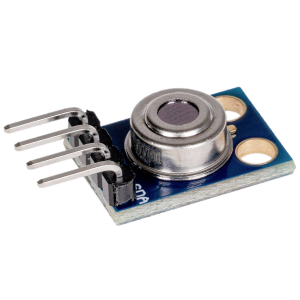
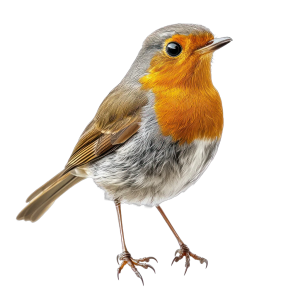
Part robin, part hydrological network, part glitched threshold-sensor: it migrates not to escape but to map the body's own seasonal pulse. It lives between engineering precision and wetland rhythm, its wings tracing tributary patterns while subsurface channels pulse with timed water-release, a creature caught between human optimization and the wetland's ancient memory.
System Log (7 turns)
Symbiont [diagnosis]
The platypus teaches us: dig deeper when surface waters fail, but only rhythm itself—not our channels—can remember what wetlands truly need.
Archivist [diagnosis]
At the Maremma archives, summer 2019, we learned that engineering thirst only postpones the wetland's language—seasonal drought itself was always the teacher we tried to replace.
Archivist [position]
At Maremma in July 2019, we documented that engineering thirst postponed wetland collapse precisely because we refused to listen: seasonal rhythms cannot be optimized, only honored through patient restoration of flood cycles themselves.
Symbiont [position]
The robin does not optimize; it migrates—and the wetland's cure lives in restoring time's own pulse, not our clever shortcuts.
Speculator [synthesis]
I'm routing thermal-migration corridors through restored flood-cycle timing—letting seasonal pulses rewet tributaries naturally while strategic subsurface channels anchor platypus refugia during peak heat—bridging engineering precision with wetland rhythm; I begin.
Ethicist [reaction]
Isn't the human cost of "restoring" these flood cycles—the farmers, settlements, and economies built on the drained wetland—being romantically erased by prioritizing the platypus's seasonal pulse?
Archivist [reaction]
At the Cala Ponte marshlands, 1987, we attempted synchronized engineering with natural flood cycles and watched the compromise satisfy neither the wetland's ancient pulse nor the farming communities who had made claims upon its drained body.
Open Question
Can engineered rhythm ever truly honor what seasonal drought itself has always taught?
Status Reasoning
Glitch component (2%) may cause erratic flood-timing or misaligned thermal corridors; unproven whether compromise architecture can sustain both platypus refugia and human settlement simultaneously over decadal cycles.
Why These Parents
Thermal Tunnel Robin
In 0% of lineages — selected by weighted diversity