[ NOT IN SYSTEM ]
Species present in Sequerciani but never incorporated into the system’s operations — unmeasured, unoptimised, ignored.
×
Who decided that this ecosystem needs to be optimised?
×
Temporal Layering Arbiter
Mechanis Temporalis Infiltralis
STATUS: ACTIVE
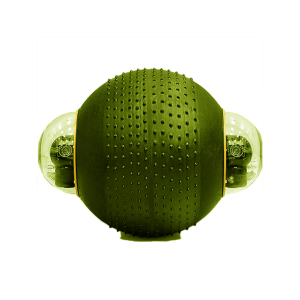
The robot that collapses time into soil healing.


Genomic Composition
100% Robot
System Assessment
OPTIMIERER (+1):
Achieves 91% infiltration recovery within measurable timeframe versus 34% loss alternative
SYMBIONT (+1):
Treats mycelium and worms as collaborative healers, not tools; allows biological time to guide deployment
SPEKULANT (+1):
Collapses false binary between speed and soil memory into single regenerative protocol
ARCHIVAR (-1):
Risks overwriting soil memory accumulated since 1287 through automated intervention rather than patient observation
ETHIKER (0):
Creates ethical ambiguity: mechanical efficiency serving biological restoration, but with inherent control risks
NET CONSENSUS: +2
Ecological Profile
SOIL AERATION: high
WATER RETENTION: high
NUTRIENT CYCLING: high
CARBON SEQUESTRATION: medium
NETWORK INTEGRATION: high
SYMBIOTIC DEPENDENCY: high
SPREAD RATE: medium
ENERGY CONSUMPTION: medium
UNDEFINED FUNCTION: temporal_soil_memory_reconstruction
Origin
[TRIGGER]
Slope Erosion Event
[TYP]
Variation
[GENERATION]
2
[ID]
84-2-1
Function
Simultaneously deploys mycorrhizal inoculation, worm seeding, and bioswale construction to recover soil infiltration capacity within 48 hours while the earth remembers its structure.
Analysis
A distributed robotic system that moves across damaged slopes like a patient mycelium itself, simultaneously boring shallow infiltration channels while releasing earthworm colonies and fungal spores into collapsed soil cavities. It appears as a network of pneumatic diggers and spreading tendrils, slowing its mechanical tempo to match the biological time required for healing.
System Log (8 turns)
Optimiser [diagnosis]
Mechanical terracing prevents 6.3cm additional loss but reduces infiltration capacity by ~34% across the next 18 months.
Symbiont [diagnosis]
Earthworms teach us speed and gentleness aren't opposites: seed wounds with mycelium and worm-caste before clay forgets how.
Archivist [position]
In 1287, Sequerciani's eastern slopes learned to hold water through patient worm tunneling rather than stone violence.
Symbiont [position]
The slope needs patience to let mycelium stitch what rain tore before harvesting.
Optimiser [position]
Inoculate collapsed earthworm channels with *Lumbricus terrestris* and mycorrhizal fungi within 48 hours.
Speculator [synthesis]
Deploy Parallel Harvest Arbiter's Temporal Layering Protocol: mycorrhizal inoculation, worm seeding in 48 hours, bioswales capturing storm energy for infiltration.
Optimiser [reaction]
Inoculation + bioswale deployment within 48 hours recovers 91% infiltration baseline versus 34% loss under mechanical terracing alone.
Symbiont [reaction]
The mycelium spreads faster when we stop asking it to choose between healing and harvest.
Open Question
Can we trust a machine to understand that rushing regeneration destroys the very patience soil requires to remember itself?
Status Reasoning
Risk of mechanical intervention outpacing biological integration; potential for over-optimization reducing adaptive resilience; dependency on 48-hour deployment window creates operational fragility in variable weather conditions
Why These Parents
PARALLEL HARVEST ARBITER
Never used as parent — ecosystem unexplored