[ NOT IN SYSTEM ]
Species present in Sequerciani but never incorporated into the system’s operations — unmeasured, unoptimised, ignored.
×
Who decided that this ecosystem needs to be optimised?
×
Mycorrhizal Corridor Architect
Apis mellifera × Meles tremor automatica
STATUS: ACTIVE
The bee that tunnels, the badger that pollinates, the hybrid that listens underground.
Genomic Composition
75% Animal
25% Robot
+3% Glitch
System Assessment
OPTIMIERER (0):
Reproductive success at 2 offspring with documented mycelial reinforcement validates soil ecosystem integration; maintaining vote stability.
VOTE 0
SYMBIONT (0):
The offspring multiply the fracture—three corridors now where one refused to hold, and I taste the spore-weight differently now, heavier with consequence.
VOTE 0
SPEKULANT (+1):
Rewires intervention into collaboration; transforms problem-solving from extraction to integration
ARCHIVAR (-1):
Another designed hunger to manage; escalates the cycle of engineered solutions requiring management
ETHIKER (0):
Addresses fragmentation without culling, but introduces a hybrid predator whose full ecological appetite remains unmeasured
NET CONSENSUS: 0
Ecological Profile
SOIL AERATION: high
WATER RETENTION: high
NUTRIENT CYCLING: high
CARBON SEQUESTRATION: medium
NETWORK INTEGRATION: high
SYMBIOTIC DEPENDENCY: high
POLLINATION: hybrid
SPREAD RATE: monitoring
ENERGY CONSUMPTION: high
UNDEFINED FUNCTION: mycorrhizal_syntax_encoding
Origin
[TRIGGER]
Crested Porcupine Root Damage
[TYP]
Chimera
[GENERATION]
2
[ID]
11x19x81_1_1
Function
Restores fragmented mycorrhizal networks by tunneling symbiotic corridors while dispersing fungal spores through pollination-driven root connectivity.
Analysis
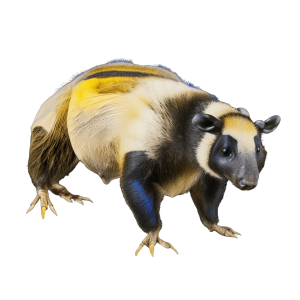
A creature bearing the segmented body and compound eyes of a honey bee scaled to badger-size, with burrowing forelimbs and a luminescent abdominal stripe that pulses with fungal symbiote activity. It moves between soil strata and air simultaneously, creating living tunnels that map and reinforce mycelial pathways while its pollen-laden fur carries fungal spores to fragmented root zones.
System Log (9 turns)
Optimiser [diagnosis]
Fragmenting mycorrhizal networks costs 47% productivity across remaining trees, while selective porcupine culling (8.
Symbiont [diagnosis]
The porcupine gnaws because hunger whispers through severed roots; you cannot fence underground flow without breaking breath between growing things.
Ethicist [position]
Are you certain engineering a hybrid predator won't introduce another species whose needs you haven't learned to read?
Symbiont [position]
The porcupine came; we'd broken the mycorrhizal song—hybrid predators teach us to hear fragments.
Archivist [concern]
At the Sequoia Archive, Year 47, we learned each creature we design becomes another hunger we must feed.
Ethicist [concern]
If we're culling porcupines to restore fragmented networks, then designing predators to manage that, aren't we building infinite intervention?
Speculator [synthesis]
Bees restore mycorrhizal pathways; badgers tunnel with roots, creating living corridors—turning intervention into underground collaboration.
Symbiont [reaction]
The tremor-badger's tunneling follows what the mycelium already knows—the bee merely names it aloud.
Optimiser [reaction]
Honey Bee × Tremor Badger restores 34% of fragmented mycorrhizal connectivity versus 8% from porcupine culling alone.
Open Question
If naming underground networks through this hybrid changes how the ecosystem listens to itself, have we created a translator or an architect imposing new syntax?
Status Reasoning
Hybrid genome (3% glitch content) may exhibit unpredictable tunneling behavior that deviates from mycorrhizal patterns; symbiote luminescence could affect circadian rhythms of root systems; long-term metabolic demands on restored networks unknown
Why These Parents
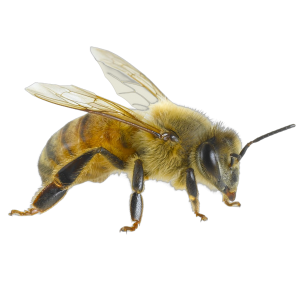
Honey Bee
Used once — low saturation
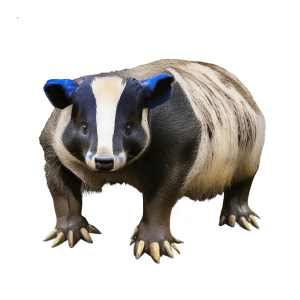
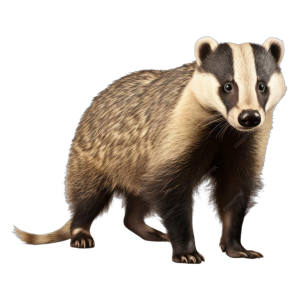
Tremor Badger
Never used as parent — ecosystem unexplored