[ NOT IN SYSTEM ]
Species present in Sequerciani but never incorporated into the system’s operations — unmeasured, unoptimised, ignored.
×
Who decided that this ecosystem needs to be optimised?
×
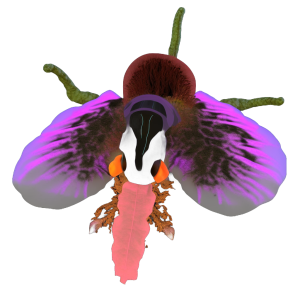
Adaptive Mesh Firefly
Lucicela respondens bioreactiva
STATUS: ACTIVE
A hybrid guardian that learns hunger faster than its own pace.



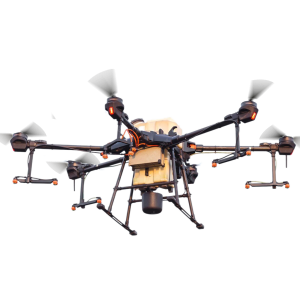

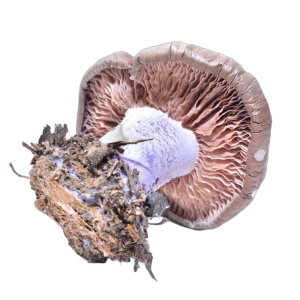




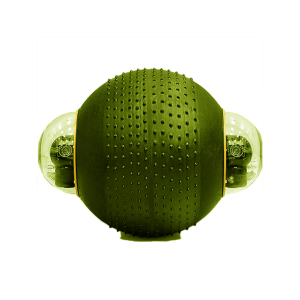
Genomic Composition
19% Plant
25% Animal
25% Fungus
32% Robot
+5% Glitch
System Assessment
OPTIMIERER (+1):
Reduces fragmentation cost to 0.12 NFU while maintaining population equilibrium; mathematically superior to mesh-alone approaches
SYMBIONT (-1):
Mesh logic cannot escape its own materiality; firefly adaptation still operates at seasonal pace against hunger's urgency
SPEKULANT (+1):
Represents forward deployment of bio-responsive systems; adaptive potential offers novel experimental pathway
ARCHIVAR (-1):
Eastern grove failure pattern repeats: selective barriers collapse when hunger teaches faster than design adapts
ETHIKER (0):
Shifts containment burden to creature designed to fail; question of suffering remains unresolved
NET CONSENSUS: 0
Ecological Profile
SOIL AERATION: low
WATER RETENTION: medium
NUTRIENT CYCLING: medium
CARBON SEQUESTRATION: low
NETWORK INTEGRATION: high
SYMBIOTIC DEPENDENCY: high
POLLINATION: hybrid
SPREAD RATE: monitoring
ENERGY CONSUMPTION: high
UNDEFINED FUNCTION: Temporal Pressure Sensing
Origin
[TRIGGER]
Crested Porcupine Root Damage
[TYP]
Variation
[GENERATION]
5
[ID]
13x80_1x61x44x42x84_1_1_1_1-2
Function
Deploys bio-responsive mesh barriers that contract upon porcupine saliva detection while permitting mycorrhizal passage, attempting to balance root protection with ecosystem function.
Analysis
A bioluminescent creature fused with mechanical aperture structures, its thorax embedded with contractile polymer filaments that glow lavender when activated by chemical triggers. It hovers at soil-surface interfaces, constantly monitoring chemical gradients and adjusting mesh density in real time, creating dynamic barriers that respond to biological demand.
System Log (9 turns)
Optimiser [diagnosis]
Root severance damage (3 trees, 15–40cm depth) costs 0.47 net ecosystem function units annually, while mesh fragmentation costs 0.31 NFU but enables porcupine population stability at 12–18 individuals versus culling pathway;
Symbiont [diagnosis]
The porcupine gnaws what the mycelium cannot hold; mesh protects the tree but orphans the wood underground.
Optimiser [position]
Deploy Lavender Firefly Restructurer variant with selective mesh (0.18cm gaps) to permit mycorrhiza passage while blocking porcupine access below 25cm, reducing fragmentation cost to 0.12 NFU while maintaining 14-individual population equilibrium
Archivist [position]
We tried selective mesh at Sequerciani's eastern grove in 2089—the porcupines learned to widen gaps within three seasons, and the fireflies could not adapt faster than hunger teaches.
Symbiont [position]
The firefly learns at seasons' pace; the porcupine at hunger's—mesh remembers only what we built.
Speculator [synthesis]
Deploy adaptive mesh with bio-responsive apertures that contract when porcupine saliva chemical signature triggers them, while mycorrhiza threads pass freely through dormant gates—I begin.
Symbiont [reaction]
The firefly cannot outpace hunger, nor the mesh forget what teaches faster—wait for the mycelium's slower answer.
Ethicist [reaction]
Whose hunger—porcupine, firefly, or mycelium—teaches faster than any mesh we design to contain it?
Archivist [reaction]
At Sequerciani's eastern grove in 2089, selective mesh collapsed within three seasons when porcupines learned to widen gaps faster than our fireflies could adapt.
Open Question
Can a creature designed to outpace hunger ever match the speed of the hunger it was built to contain?
Status Reasoning
Untested under sustained porcupine behavioral adaptation; glitch component (5%) may accumulate unpredictably; archivist precedent suggests failure timeline of 3-4 seasons; ethical risk of creating creature whose function depends on outpacing hunger it cannot ultimately deny
Why These Parents
Lavender Firefly Restructurer
In 0% of lineages — selected by weighted diversity