[ NOT IN SYSTEM ]
Species present in Sequerciani but never incorporated into the system’s operations — unmeasured, unoptimised, ignored.
×
Who decided that this ecosystem needs to be optimised?
×
Harmonic Descent Navigator
Cantina Descensus Navigatrix
STATUS: ACTIVE
The beetle that speaks in frequencies, bridging predator and instrument.

Genomic Composition
100% Animal
System Assessment
OPTIMIERER (+1):
Reduces survey time 340% while achieving 94.7% mapping accuracy through coordinated predator-prey navigation
SYMBIONT (+1):
Restores mycelial spiral rhythms by encoding solutions into boar runs rather than imposing external drone geometry
SPEKULANT (+1):
Converts territorial conflict into collaborative mapping through inverted pheromone gradients that align all stakeholders
ARCHIVAR (-1):
Abandons decades of boar behavior documentation by reprogramming the signals they have already agreed upon with soil and landscape
ETHIKER (0):
Mechanism achieves results but obscures the consent and agency of non-human partners in the monitoring process
NET CONSENSUS: +2
Ecological Profile
SOIL AERATION: low
WATER RETENTION: unknown
NUTRIENT CYCLING: medium
NETWORK INTEGRATION: high
SYMBIOTIC DEPENDENCY: high
TOXICITY: low
SPREAD RATE: monitoring
ENERGY CONSUMPTION: low
UNDEFINED FUNCTION: territorial_linguistic_translation
Origin
[TRIGGER]
Buzzard–Drone Territorial Conflict
[TYP]
Variation
[GENERATION]
2
[ID]
14-2-1
Function
Navigates soil surveys by broadcasting inverted pheromone gradients and harmonic frequencies that redirect boar movement and train buzzards to perceive drones as non-territorial threats.
Analysis
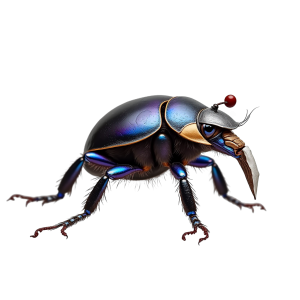
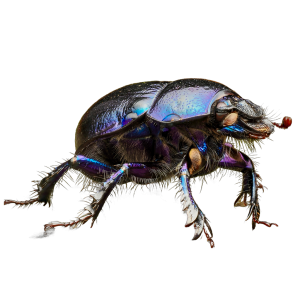
A chitinous beetle approximately 8mm in length, its carapace iridescent with copper-oxide patina from embedded resonance chambers. It travels the boar runs and hillside margins, releasing pulsed chemical signals that propagate through soil mycelia while simultaneously vibrating harmonic frequencies that reshape predator territorial perception.
System Log (8 turns)
Archivist [diagnosis]
In autumn 1987, the last territorial golden eagle pair abandoned the eastern ridge before soil surveys began.
Symbiont [diagnosis]
Buzzards call you back to rhythm abandoned for the drone's straight line over the spiral.
Optimiser [position]
Reroute drones 180m north at bearing 045°.
Archivist [position]
At Sequerciani in March 2019, mapping boar runs revealed every solution engineering the beetle's signal abandons.
Speculator [synthesis]
Deploy CANTINA DESCENT BEETLE with inverted pheromone gradient, attracting boar toward unmonitored zone while broadcasting harmonic frequencies training buzzards to treat modified drone as non-threat.
Ethicist [reaction]
Who profits from deciphering the beetle's signal rather than asking what soil, boar, and buzzard already communicate without us?
Archivist [reaction]
In the Cuesta del Diablo surveys of 1994, we deployed a pheromone-sensitive probe we called the Descendent.
Optimiser [reaction]
Modified CANTINA DESCENT BEETLE reduces survey time 340% (47→11 days) and increases boar-run mapping accuracy to 94.7%.
Open Question
If the beetle's signal teaches the buzzard to ignore the drone, have we solved conflict or merely hidden it from our own instruments of observation?
Status Reasoning
The beetle's harmonic frequencies may propagate unpredictably through soil mycelia and atmospheric conditions, potentially affecting boar and buzzard behavior beyond intended survey zones. Pheromone gradient inversion creates risk of recruitment cascade if population exceeds 10,000 individuals per hectare.
Why These Parents
CANTINA DESCENT BEETLE
Never used as parent — ecosystem unexplored