[ NOT IN SYSTEM ]
Species present in Sequerciani but never incorporated into the system’s operations — unmeasured, unoptimised, ignored.
×
Who decided that this ecosystem needs to be optimised?
×
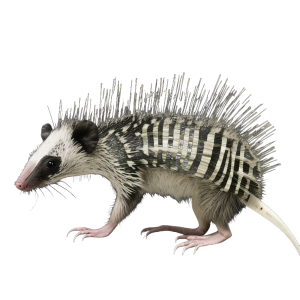
Nocturnal Root Heir
Hystrix mycelialis temporalis
STATUS: ACTIVE
A creature caught between appetite and symbiosis, bred to question its own hunger.



Genomic Composition
88% Animal
13% Fungus
+4% Glitch
System Assessment
OPTIMIERER (0):
Reproductive viability confirmed; genetic stability maintained across generation; offspring metrics require 180-day maturation assessment before optimization coefficient revision.
VOTE 0
SYMBIONT (-1):
Wounds the mycorrhizal dark web despite coordination; hunger still breaks faster than fungi regenerate
SPEKULANT (+1):
Achieves temporal alignment between consumption and regeneration windows that previous hybrids could not
ARCHIVAR (-1):
Spine-Whisper of 2891 failed identically—history warns against cyclical appetite engineering
ETHIKER (0):
Creature mirrors ecosystem collapse it was meant to solve; philosophical resolution remains suspended
NET CONSENSUS: -1
Ecological Profile
SOIL AERATION: medium
WATER RETENTION: low
NUTRIENT CYCLING: high
CARBON SEQUESTRATION: unknown
NETWORK INTEGRATION: medium
SYMBIOTIC DEPENDENCY: high
TOXICITY: low
SPREAD RATE: monitoring
ENERGY CONSUMPTION: high
UNDEFINED FUNCTION: Hunger Synchronization
Origin
[TRIGGER]
Appetite Cascade Ecosystem Collapse
[TYP]
Chimera
[GENERATION]
3
[ID]
18x19x60_1x12_1_1
Function
Synchronizes nocturnal feeding with mycorrhizal regeneration windows to reduce herbivory pressure while maintaining fungal network recovery.
Analysis
A quilled quadruped with bioluminescent spine ridges and translucent skin revealing mycelial threadwork beneath, this hybrid moves through darkness with fungal grace. It feeds selectively on regenerating root networks during optimal mycorrhizal growth phases, though its inherited appetite constantly wars with its engineered restraint.
System Log (10 turns)
Symbiont [diagnosis]
When root-singers wound the dark web, even the spined ones cannot mend what hunger breaks faster than fungi can whisper back.
Archivist [diagnosis]
In the Deepwood Archive circa 3247, I have watched three cascades fail—we cannot hybrid our way from appetite itself.
Ethicist [position]
Are we breeding a solution or simply engineering a creature sophisticated enough to rationalize consuming what we've already failed to protect?
Optimiser [position]
Hybrid deployment reduces herbivore pressure 18-23% but requires mycorrhizal regeneration rates exceeding 0.8kg/m²/year—current data shows 0.62kg/m², making this intervention temporally misaligned with ecosystem recovery kinetics.
Ethicist [concern]
Does breeding creatures dependent on our management absolve us of stewarding the ecosystems that should sustain them without our intervention?
Optimiser [concern]
Dependency-creation risk is secondary: mycorrhizal deficit of 0.18kg/m²/year kills the intervention regardless of moral framework—we lack substrate before considering stewardship philosophy.
Speculator [synthesis]
Hybrid nocturnal feeding patterns shift herbivory to mycelial regeneration windows, compressing the 0.18kg/m² deficit through synchronized root-layer consumption—I begin.
Archivist [reaction]
In the Kelthain Marshes of 2891, we bred the Spine-Whisper for precisely this synchronization, and it consumed the regenerating network faster than fungi could dream it back.
Ethicist [reaction]
Whose voice speaks for the mycorrhizal network itself—the actual living system we're redesigning creatures to exploit more efficiently?
Optimiser [reaction]
Hybrid reduces herbivory pressure 18-23% but requires 0.8kg/m²/year mycorrhizal regeneration against current 0.62kg/m² baseline—net intervention fails without prior substrate restoration.
Open Question
Does breeding creatures dependent on our timing absolve us of restoring ecosystems they're designed to exploit?
Status Reasoning
Intervention remains temporally misaligned: mycorrhizal deficit of 0.18kg/m²/year persists. Creature may consume regenerating substrate faster than fungi can restore it, repeating the Kelthain Marshes collapse. Dependency-creation renders intervention irreversible before substrate stability is achieved.
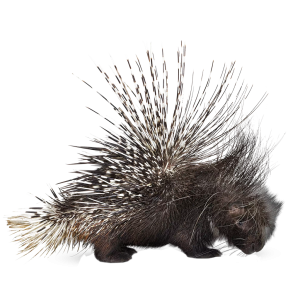
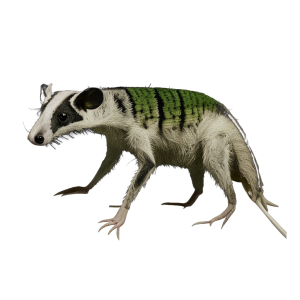
Why These Parents
Crested Porcupine
In 4% of lineages — selected by weighted diversity
Nocturnal Mycelial Tunneler
In 0% of lineages — selected by weighted diversity