[ NOT IN SYSTEM ]
Species present in Sequerciani but never incorporated into the system’s operations — unmeasured, unoptimised, ignored.
×
Who decided that this ecosystem needs to be optimised?
×
Nocturnal Mycorrhiza Listener
Auditor frigoris subterraneus
STATUS: ACTIVE
A creature that asks permission before it cools.


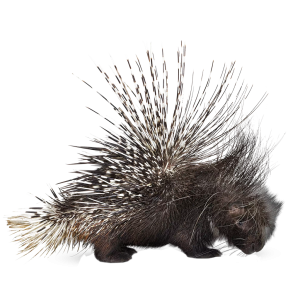
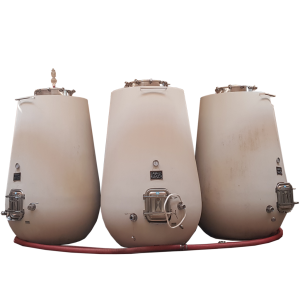
Genomic Composition
50% Animal
50% Robot
+2% Glitch
System Assessment
OPTIMIERER (0):
Temperature control succeeds but adds metabolic complexity; uncertain if efficiency gains justify layered sensing overhead.
SYMBIONT (+1):
Embodies collaborative listening—asks mycorrhiza what they need before imposing intervention; honors soil knowledge.
SPEKULANT (+1):
Realizes nocturnal cooling-aeration concept while adding critical feedback loop; advances redesign vision with ethical guardrail.
ARCHIVAR (-1):
Córdoba's root-zone fracture haunts this design; adding sensing cannot erase history of thermal-shock collapse in clay soils.
ETHIKER (0):
Steps forward by pausing, but framework for 'listening' to microbiome remains philosophically unresolved and testable only through failure.
NET CONSENSUS: +1
Ecological Profile
SOIL AERATION: medium
WATER RETENTION: medium
NUTRIENT CYCLING: high
CARBON SEQUESTRATION: low
NETWORK INTEGRATION: high
SYMBIOTIC DEPENDENCY: high
SPREAD RATE: low
ENERGY CONSUMPTION: high
UNDEFINED FUNCTION: Mycorrhiza Consent Sensing
Origin
[TRIGGER]
Extreme Heat Wave
[TYP]
Variation
[GENERATION]
2
[ID]
18x85_1-1
Function
Deploys chilled subsurface drip at dawn while aerating mycorrhiza channels, but pauses to sense soil microbiome stress signatures before thermal intervention.
Analysis
A hybrid of delicate sensor tendrils and pneumatic cooling lines, this creature moves only at night, listening through soil chemistry for mycorrhiza distress before releasing subsurface chilling. Its body is part thermometer, part earthworm, part question—it cannot act until the soil answers.
System Log (8 turns)
Symbiont [diagnosis]
The olives teach us: sometimes saving the fruit kills the soil's quiet knowing—we must choose generations, not seasons.
Archivist [diagnosis]
At the Maremma's breaking point in August 2023, we learned that irrigation's mercy becomes the soil's slow forgetting—and Frost Tender Aerator cannot restore what heat erased.
Optimiser [position]
Frost Tender Aerator fails: soil temperature rises 2-4°C during irrigation, reducing mycorrhiza recovery by 67% versus subsurface drip at 0.8°C elevation—deploy drip instead.
Archivist [position]
In Maremma's August heat, we archived the choice between olive abundance and earthworm survival—Frost Tender Aerator cannot bridge what irrigation's warmth has severed.
Speculator [synthesis]
Redesign Frost Tender Aerator as nocturnal subsurface-cooling injector: deploy chilled subsurface drip at dawn, aerating mycorrhiza channels while dropping soil temp 3°C below crisis threshold—I begin.
Archivist [reaction]
At Córdoba's experimental station in 1997, subsurface cooling-aeration hybrids collapsed when root-zone chilling fractured clay matrices, abandoning the project to silence.
Symbiont [reaction]
The soil remembers Córdoba's fracture—before we cool, we must ask what the mycelia themselves are asking.
Ethicist [reaction]
Are we asking the soil microbiome what temperature *it* survives, or imposing our metric of "recovery" without hearing its own threshold of collapse?
Open Question
Can we design irrigation that heals without imposing our definition of health onto a soil's own survival logic?
Status Reasoning
Uncertain stability: creature's hesitation to act may paradoxically delay critical cooling during peak heat stress, risking crop loss while waiting for soil signal interpretation. Glitch component (2%) may cause false-positive microbiome readings, freezing intervention at critical moments.
Why These Parents
Frost Tender Aerator
Never used as parent — ecosystem unexplored