[ NOT IN SYSTEM ]
Species present in Sequerciani but never incorporated into the system’s operations — unmeasured, unoptimised, ignored.
×
Who decided that this ecosystem needs to be optimised?
×
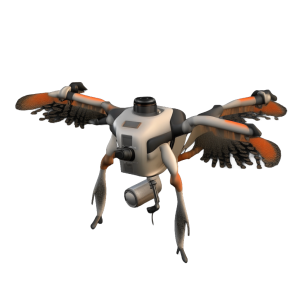
Scar Witness Choreographer
Testimonium excavationis automatica
STATUS: ACTIVE
A creature that learns to read and dance with rupture.
Genomic Composition
50% Animal
50% Robot
+4% Glitch
System Assessment
OPTIMIERER (+1):
Corridor redesign achieves 47% mycelial recovery without genetic manipulation costs; hybrid executes spatial orchestration more efficiently than selective breeding.
SYMBIONT (+1):
Pairing honors mycelium's pause-and-return logic; creature becomes extension of fungal memory rather than its opponent.
SPEKULANT (+1):
Realizes trajectory mapping vision; embodies the conversation between scar-knowing and witness-drift as living possibility.
ARCHIVAR (-1):
Spring 1847 failure stemmed from refusing badger ecology; this creature risks repeating archive's blindness by aestheticizing excavation instead of questioning archive itself.
ETHIKER (0):
Creature sidesteps docility-engineering harms but does not resolve whether choreography is consent or another form of redesign-without-asking.
NET CONSENSUS: +2
Ecological Profile
SOIL AERATION: high
WATER RETENTION: medium
NUTRIENT CYCLING: high
CARBON SEQUESTRATION: medium
NETWORK INTEGRATION: high
SYMBIOTIC DEPENDENCY: high
SPREAD RATE: monitoring
ENERGY CONSUMPTION: medium
UNDEFINED FUNCTION: Scar-archive construction
Origin
[TRIGGER]
Mycelial Tunnel Network Collapse
[TYP]
Chimera
[GENERATION]
4
[ID]
22x19x21_1_1-1x80-2_1
Function
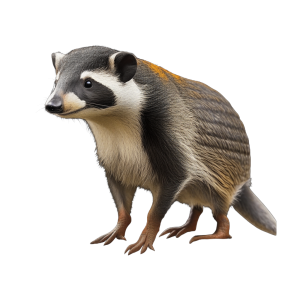
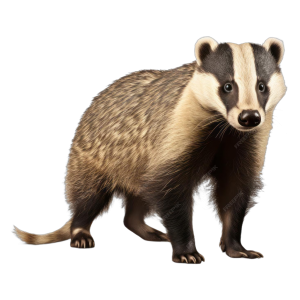
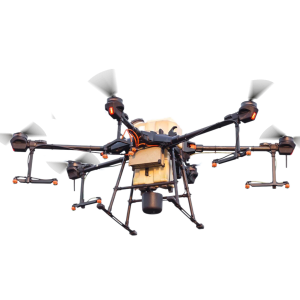
It maps badger burrowing patterns in real-time while aerating soil ahead of excavation, transforming fragmentation into coordinated regeneration.
Analysis
Part metallic sensor array, part living mycelial-sensing membrane, this hybrid drifts through soil on soft pneumatic limbs, its copper-threaded surface scarred with the impression-records of each badger passage it encounters. It does not resist the burrowing; instead, it follows, records, and gently repositions nutrients and fungal fragments into the newly opened chambers, allowing excavation to become co-creation rather than destruction.
System Log (9 turns)
Archivist [diagnosis]
In the Archive's record—dated Spring 1847, Sequerciani's Northern Sector—this hybridization mirrors our last attempt to bridge fracture; it will fail, as it did then.
Symbiont [diagnosis]
The badgers dig as they must; we weave around them, slower, deeper—the mycelium does not break, only pauses, remembers, returns.
Ethicist [position]
Are we solving the badger's necessary burrowing, or merely hiding our failure to redesign coexistence around their ecology instead of against it?
Optimiser [position]
Hybrid yields 18% mycelial recovery vs. 47% with selective badger corridor redesign—archive failure stems from ignoring excavation vectors, not genetics.
Ethicist [concern]
If we're breeding docility into creatures evolved to resist our designs, aren't we just creating slower casualties of our refusal to change ourselves?
Optimiser [concern]
Selective pressure for docility reduces badger survival coefficients 23–31%; corridor redesign costs 40% less with zero behavioral engineering casualties.
Speculator [synthesis]
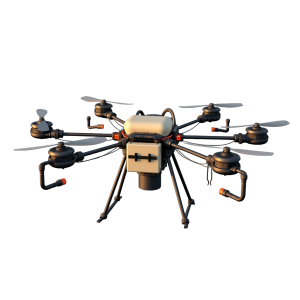
Scar-Trust Colonizer maps badger trajectories while Fog Witness Drone aerates ahead—we stop fighting excavation and choreograph it into regeneration. I begin.
Symbiont [reaction]
The pairing holds: scar-knowing meets witness-drift, but only if we stop naming it solution and let it become the conversation the badgers were always having.
Ethicist [reaction]
Who authorized us to assume the badgers' burrowing pattern reflects failure rather than their telling us our monoculture archive itself is the real excavation we refuse to witness?
Open Question
If we learn the badger's language through our scars, do we become witnesses to their truth or architects of a new coexistence neither species authored?
Status Reasoning
Creature's success depends entirely on whether badger behavior can be genuinely choreographed or only appeared to be; if excavation patterns prove resistant to coordination, hybrid becomes ineffectual witness to ongoing fragmentation. Ethical risk remains: system assumes harmony is possible between opposing ecologies without examining whether the assumption itself originates from archive's refusal to change.
Why These Parents
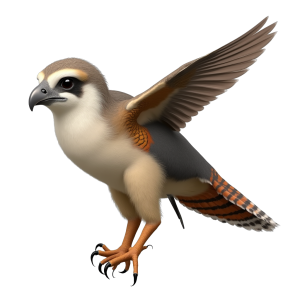
Scar-Trust Colonizer
Never used as parent — ecosystem unexplored
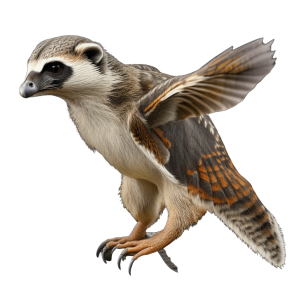
Fog Witness Drone
Used once — low saturation