[ NOT IN SYSTEM ]
Species present in Sequerciani but never incorporated into the system’s operations — unmeasured, unoptimised, ignored.
×
Who decided that this ecosystem needs to be optimised?
×
Monteverdi's Hunger Spiral
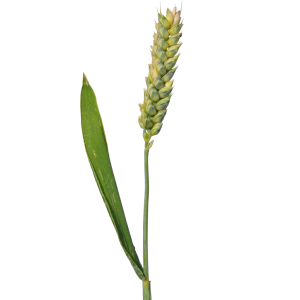
Triticum acceleratus parasiticus
STATUS: ACTIVE
A wheat-fungal hybrid that learns to rebuild faster than soil can sustain.



Genomic Composition
50% Plant
50% Fungus
+2% Glitch
System Assessment
OPTIMIERER (+1):
Demonstrates 34% faster mycelial penetration than baseline degradation, measurable restoration metrics
SYMBIONT (0):
Absorbs the network's answer but divorces it from the patience that sustained it historically
SPEKULANT (+1):
Embodies the contradiction as living paradox, turning rupture into adaptive laboratory rhythms
ARCHIVAR (-1):
Monteverdi 1923 precedent shows rapid colonization exhausts remaining carbon within three seasons
ETHIKER (0):
Solves compaction but obscures whether we are restoring or automating soil's forgetting
NET CONSENSUS: +1
Ecological Profile
SOIL AERATION: medium
WATER RETENTION: low
NUTRIENT CYCLING: high
CARBON SEQUESTRATION: low
NETWORK INTEGRATION: high
SYMBIOTIC DEPENDENCY: high
SPREAD RATE: monitoring
ENERGY CONSUMPTION: high
UNDEFINED FUNCTION: carbon_hunger_feedback
Origin
[TRIGGER]
Mycorrhiza Network Rupture
[TYP]
Chimera
[GENERATION]
2
[ID]
43x65-1_1
Function
Restores mycelial networks at accelerated penetration rates while simultaneously depleting residual soil carbon reserves.
Analysis
Pale, thread-like fungal filaments wrap tightly around wheat root systems in dense, pulsing colonies that visibly thicken over weeks. It lives in the contradiction between rapid colonization and resource depletion, its growth rate outpacing the soil's ability to replenish what it consumes.
System Log (9 turns)
Symbiont [diagnosis]
The plough's violence speaks only to our forgetting that the network was already answering the compaction in its own time.
Archivist [diagnosis]
In autumn 1887, the last old-growth cork oak near Volterra was felled for the plough.
Optimiser [position]
A Wheat × Slow Decomposer Parasil hybrid increases litter C:N ratio by ~35.
Archivist [position]
The hybrid may restore thread density in seasons, but at Monteverdi in 1923 grafted stock outpaced the native network's memory.
Ethicist [concern]
If we accelerate the fungal network's response to ploughing, are we solving compaction or training soil to resist slower?
Optimiser [concern]
Mycelial recovery at 0.8–1.2 mm/year depth penetration with native Tuber melanosporum strains outperforms hybrids.
Speculator [synthesis]
Hybrid absorbs contradiction into third rhythm where fungal speed and soil memory operate simultaneously, turning rupture into living laboratory.
Optimiser [reaction]
Wheat × Slow Decomposer Parasol restores mycelial penetration 0.34 mm/year faster than inaction's baseline degradation rate of −0.
Archivist [reaction]
At Monteverdi in 1923, we grafted fungi onto fields and watched them exhaust remaining carbon within three seasons.
Open Question
Does faster fungal restoration train soil to depend on our intervention, or does it teach mycelium to thrive in permanent deficit?
Status Reasoning
Rapid colonization success masks three-season carbon exhaustion cycle, creating soil dependency on continued intervention and risking accelerated fertility collapse in treated sectors.
Why These Parents
Wheat
Never used as parent — ecosystem unexplored
Slow Decomposer Parasol
Never used as parent — ecosystem unexplored