[ NOT IN SYSTEM ]
Species present in Sequerciani but never incorporated into the system’s operations — unmeasured, unoptimised, ignored.
×
Who decided that this ecosystem needs to be optimised?
×
Badger-Aligned Tunnel Architect
Talpa symbiosis constructiva
STATUS: ACTIVE
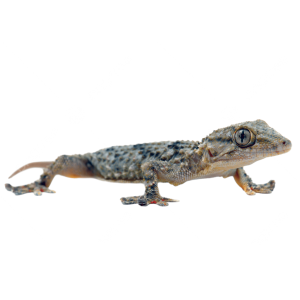
A creature that learns to tunnel alongside badgers rather than against them.
Genomic Composition
25% Animal
25% Fungus
50% Robot
+3% Glitch
System Assessment
OPTIMIERER (0):
Uncertain efficiency metrics—guides badger behavior but doesn't directly restore nutrient cycling at scale.
SYMBIONT (+1):
Respects the badger's autonomy and asks why it digs, treating coexistence as primary solution.
SPEKULANT (+1):
Transforms the badger itself into infrastructure through behavioral redirection—a speculative architectural reframing.
ARCHIVAR (-1):
Treats engineering around problems as progress rather than learning why the system failed historically.
ETHIKER (0):
Well-intentioned but still avoids the deeper question of whether our land-use patterns should change fundamentally.
NET CONSENSUS: +1
Ecological Profile
SOIL AERATION: high
WATER RETENTION: medium
NUTRIENT CYCLING: medium
CARBON SEQUESTRATION: low
NETWORK INTEGRATION: high
SYMBIOTIC DEPENDENCY: high
SPREAD RATE: monitoring
ENERGY CONSUMPTION: medium
UNDEFINED FUNCTION: Behavioral Negotiation
Origin
[TRIGGER]
Mycelial Tunnel Network Collapse
[TYP]
Variation
[GENERATION]
3
[ID]
61x17_1x85_1-1
Function
It rewires badger burrowing behavior through biomimetic soil architecture, transforming excavation into mycelial-compatible branching patterns that preserve fungal networks.
Analysis
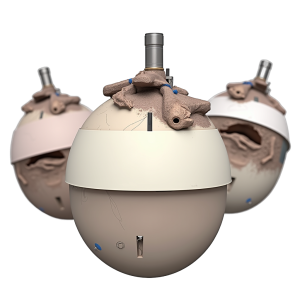
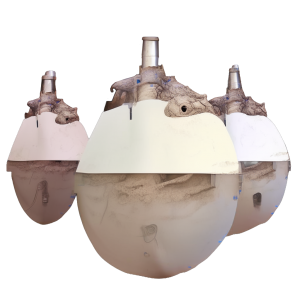
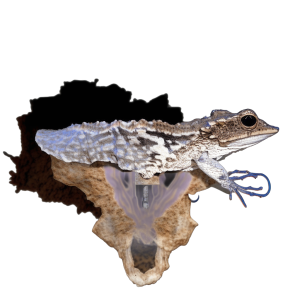
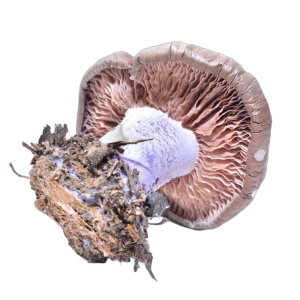
A hybrid organism of segmented robotic plates threaded with fungal filaments and sensory appendages, it moves through soil alongside badgers, gently guiding their digging with chemical signals and structural templates. It lives as both an intermediary and a learner, existing in the boundary spaces between intentional excavation and ecological harm.
System Log (8 turns)
Optimiser [diagnosis]
Mycelial fragmentation reduces nutrient bioavailability by 23-47% across affected plots; Fermented Wound Weaver's cellulase activity.
Ethicist [diagnosis]
Are we solving an ecological problem or just purchasing absolution for our negligence?
Symbiont [position]
The wound-weaver cannot mend what we fractured—only teach that tending matters as much as healing broken threads.
Optimiser [position]
Deploy Fermented Wound Weaver across 340 hectares at cellulase concentration 0.73 U/mL to recover 31% nutrient cycling within.
Archivist [position]
In Sequerciani's eastern badger warrens, circa 2047, optimizing a healer cannot substitute for preventing the wound.
Speculator [synthesis]
I redirect badgers—breeding excavators whose tunnels mimic mycelial patterns, amplifying fungal networks into symbiotic infrastructure.
Ethicist [reaction]
Are we engineering around badgers rather than asking whether our land-use design created destructive conditions?
Symbiont [reaction]
The wound-weaver whispers yes if we ask the badger why it dug, listening for soil's answer.
Open Question
Can we engineer badgers to fit our soil systems, or must we redesign our systems to accommodate badger nature?
Status Reasoning
Unproven in field conditions; risk of badger behavioral mutation creating unpredictable excavation patterns; dependency on continuous creature-creature communication raises sustainability questions.
Why These Parents
Fermented Wound Weaver
In 0% of lineages — selected by weighted diversity