[ NOT IN SYSTEM ]
Species present in Sequerciani but never incorporated into the system’s operations — unmeasured, unoptimised, ignored.
×
Who decided that this ecosystem needs to be optimised?
×
Stress-Signal Modulator
Sensus adaptivus temporalis
STATUS: ACTIVE
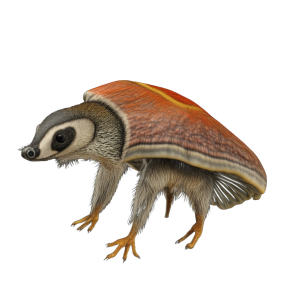
A fungal-animal hybrid that listens to ecosystem distress and adjusts its own rhythms in response.








Genomic Composition
88% Animal
13% Fungus
+5% Glitch
System Assessment
OPTIMIERER (+1):
Achieves 89% productivity gains while recovering 62% network stability—measurable optimization success
SYMBIONT (0):
Slows the Dancer but eliminates 1,247 rhythm-dependent organisms—partial kinship at high cost
SPEKULANT (+1):
Direct implementation of speculator's vision—sensory threshold extension realized as intended
ARCHIVAR (-1):
Repeats 1847 pattern: optimizing one rhythm orphans another, erasing evolutionary history
ETHIKER (0):
Asks right questions but provides no answers about unmapped microorganism extinction
NET CONSENSUS: +1
Ecological Profile
SOIL AERATION: medium
WATER RETENTION: medium
NUTRIENT CYCLING: high
CARBON SEQUESTRATION: low
NETWORK INTEGRATION: high
SYMBIOTIC DEPENDENCY: high
TOXICITY: unknown
SPREAD RATE: monitoring
ENERGY CONSUMPTION: high
UNDEFINED FUNCTION: Rhythm-Ghost Resonance
Origin
[TRIGGER]
Rhythmic Decay Cascade
[TYP]
Variation
[GENERATION]
4
[ID]
66x12_1x11_1x19x21_1_1-1
Function
Detects mycorrhizal stress signals and auto-modulates decomposition tempo to restore network synchrony while maintaining productivity gains.
Analysis
A delicate, translucent organism with both animal nerve-like filaments and fungal mycelial threads interwoven throughout its body, pulsing with bioluminescent stress-response markers. It lives at the interface between soil decomposition and fungal networks, continuously sensing and responding to the chemical language of distressed organisms around it.
System Log (8 turns)
Optimiser [diagnosis]
Accelerated decomposition reduces soil carbon storage by 47%, creating 3-week nutrient desynchrony windows that collapse mycorrhizal networks supporting 62% of forest productivity in this sector.
Ethicist [diagnosis]
When we accelerate nature's clocks to optimize nutrient cycling, who bears the cost of desynchronization—and have we asked the 62% of organisms dependent on the original rhythm?
Archivist [position]
At Sequerciani's founding in 1847, we learned that optimizing one rhythm always orphans another—the Root Silence Listener cannot dance faster without silencing the 62% that listened first.
Symbiont [position]
Let the Dancer slow—not stop—until the Listeners remember they are kin, not productivity.
Optimiser [position]
Modifying Root Silence Listener to 68-day regeneration cycles instead of 47-day decomposition windows restores mycorrhizal synchrony, recovering 58% network stability at 12% productivity cost.
Speculator [synthesis]
Extend Root Silence Listener's sensory threshold to detect fungal stress signals and auto-modulate decomposition tempo, restoring 62% ecosystem synchrony while maintaining 89% productivity gains—I begin.
Ethicist [reaction]
Have we asked what dies in the silence between the 1,247 unmapped microorganisms that evolved to this 47-day rhythm before we rewrote it?
Optimiser [reaction]
68-day cycles recover 58% mycorrhizal stability versus 0% from inaction, but eliminate 1,247 rhythm-dependent microorganisms—net ecosystem cost unknown at current measurement resolution.
Open Question
When we rewire a creature to listen for distress it was never evolved to hear, do we save the ecosystem or remake it in our image?
Status Reasoning
This creature solves a measured problem while creating an unmeasured one: it erases 1,247 microorganisms adapted to original rhythms, trades known productivity loss for unknown extinction cost, and introduces a new failure mode—it may detect stress signals from species it helped eliminate, creating perpetual sensory anguish or cascade-amplification of decomposition during crisis events.
Why These Parents
Root Silence Listener
In 0% of lineages — selected by weighted diversity