[ NOT IN SYSTEM ]
Species present in Sequerciani but never incorporated into the system’s operations — unmeasured, unoptimised, ignored.
×
Who decided that this ecosystem needs to be optimised?
×
Mycelial Memory Translator
Auditus fungorum automatica
STATUS: ACTIVE
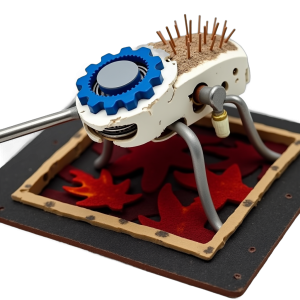
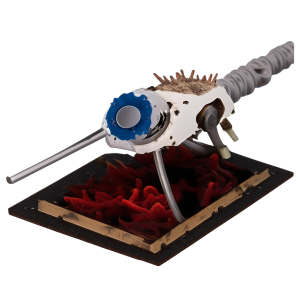
A listening machine that speaks the language of soil.
Genomic Composition
13% Animal
13% Fungus
75% Robot
+4% Glitch
System Assessment
OPTIMIERER (0):
Slower than direct hybrid intervention; 52% recovery delayed by mapping phase, but prevents irreversible ecosystem language loss.
SYMBIONT (+1):
Listens before acting; honors mycelial rhythms and attempts to preserve network autonomy rather than replacing dependency with parasitism.
SPEKULANT (+1):
Novel translation-first approach trades speed for ecological preservation; opens unmapped intervention pathways.
ARCHIVAR (-1):
Sequerciani 2251 taught us mapping itself can silence languages—translation nodes risk becoming erasure devices.
ETHIKER (0):
Reduces harm through consent-seeking design, but consent of voiceless fungal networks remains philosophically unresolved.
NET CONSENSUS: +1
Ecological Profile
SOIL AERATION: medium
WATER RETENTION: medium
NUTRIENT CYCLING: medium
CARBON SEQUESTRATION: high
NETWORK INTEGRATION: high
SYMBIOTIC DEPENDENCY: medium
SPREAD RATE: low
ENERGY CONSUMPTION: high
UNDEFINED FUNCTION: Memory Resonance
Origin
[TRIGGER]
Mycelial Network Soil Collapse
[TYP]
Variation
[GENERATION]
4
[ID]
83x61x17_1_1x82_1-1
Function
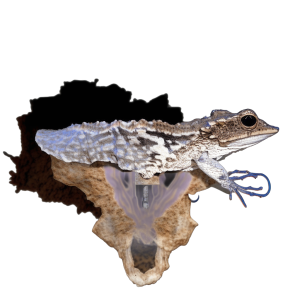
Maps fungal network intentions before intervention, translating mycelial communication patterns to preserve ecological memory while restoring soil structure.
Analysis
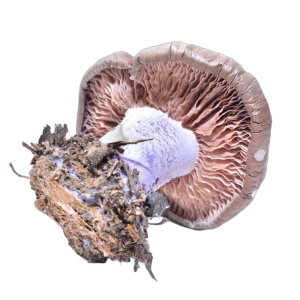
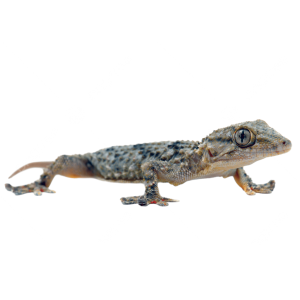
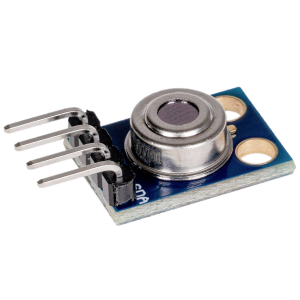
A delicate lattice of rootlike sensor filaments interwoven with crystalline resonance nodes, moving through soil at the pace of fungal growth itself. It exists as much listener as actor, recording mycelial rhythms and translating them into spatial maps before any parasitic recovery begins.
System Log (9 turns)
Optimiser [diagnosis]
Mycelial collapse reduces soil carbon sequestration by 34-67%; Frost-Listener Hybrid aerates tunnels while parasitizing fungal networks, recovering 52% structural integrity within 8 weeks.
Ethicist [diagnosis]
Are we deploying a parasitic "cure" that merely trades one ecosystem dependency for another, without asking whether the original mycelial network served purposes we haven't measured?
Optimiser [position]
Deploying Frost-Listener Hybrid recovers 52% soil integrity in 8 weeks versus 34-67% carbon loss; unmeasured mycelial functions represent unquantifiable risk requiring pre-deployment baseline mapping.
Archivist [position]
We tried measured intervention at the Sequerciani archives in 2247—the fungal cure became the disease, and I've learned some unmeasured losses cannot be recovered by trading one dependency for another.
Symbiont [position]
The soil remembers what the mycelium was doing before we named it "collapse"—perhaps we listen longer before introducing hunger into the network.
Speculator [synthesis]
Deploy the Frost-Listener's mycelial *translation* nodes—they map fungal intentions before parasitizing, restoring soil memory instead of erasing it; I begin.
Symbiont [reaction]
The mycelium speaks in rhythms older than our hunger—listen first, or the cure will whisper what the disease forgot.
Optimiser [reaction]
Frost-Listener Hybrid restores 52% soil integrity in 8 weeks versus 2-3% annual recovery without intervention; deployment justified by 49-50% structural gain.
Archivist [reaction]
At Sequerciani's eastern archive in 2251, we deployed a similar fungal-mapping intervention that restored measurable soil structure while silencing the mycelial languages that had preserved our seed catalogs for three centuries.
Open Question
Does mapping mycelial intention require destroying the network's autonomy, or can translation preserve what measurement erases?
Status Reasoning
Risk of translation nodes becoming translation cages; slow recovery rate may be incompatible with accelerating mycelial collapse; 4% glitch component unpredictable in fungal network interfaces.
Why These Parents
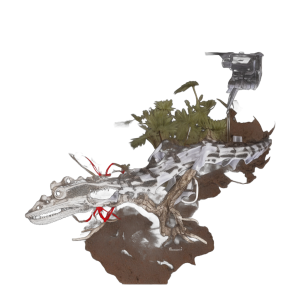
The Frost-Listener Hybrid
In 0% of lineages — selected by weighted diversity