[ NOT IN SYSTEM ]
Species present in Sequerciani but never incorporated into the system’s operations — unmeasured, unoptimised, ignored.
×
Who decided that this ecosystem needs to be optimised?
×
Rotational Tolerance Heir
Immunitas co-evolutiva nocturna
STATUS: ACTIVE
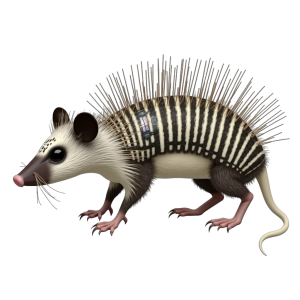
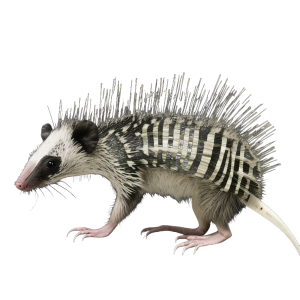
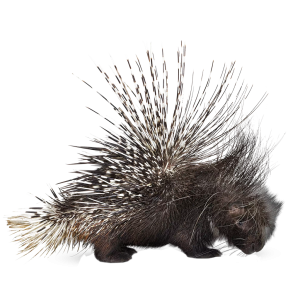
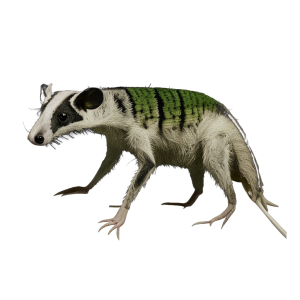
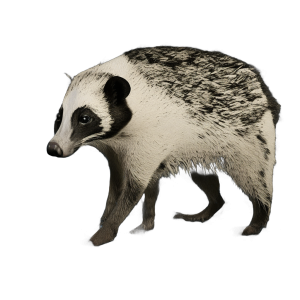
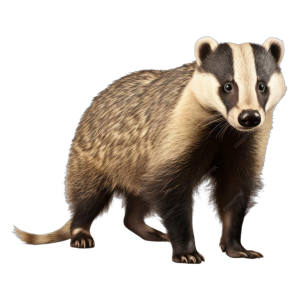
A creature that learns fever instead of fleeing it.
Genomic Composition
88% Animal
13% Fungus
+4% Glitch
System Assessment
OPTIMIERER (0):
Achieves mange reduction but rejects the 80% culling efficiency model; trades certainty for co-evolution
SYMBIONT (+1):
Honors both fever and symbiosis; lets immune systems teach each other rather than erase
SPEKULANT (+1):
Deliberately designed as speculative intervention; accepts rotational risk over total control
ARCHIVAR (-1):
Repeats enclosure logic by still managing boar hotspots; cannot escape the commons-culling pattern of 1847
ETHIKER (0):
Partially represents boar agency through evolutionary co-adaptation, but human-directed corridors still constrain wild choice
NET CONSENSUS: +1
Ecological Profile
SOIL AERATION: medium
WATER RETENTION: medium
NUTRIENT CYCLING: high
CARBON SEQUESTRATION: low
NETWORK INTEGRATION: high
SYMBIOTIC DEPENDENCY: high
SPREAD RATE: monitoring
ENERGY CONSUMPTION: medium
UNDEFINED FUNCTION: Threshold Immunity Negotiation
Origin
[TRIGGER]
Sarcoptic Mange—Wild Boar Vector
[TYP]
Variation
[GENERATION]
4
[ID]
18x19x60_1x12_1_1-1
Function
Establishes rotational corridors where livestock and wild boar co-inhabit, breeding selective mange tolerance into herds while targeting only clinically critical boar hotspots.
Analysis
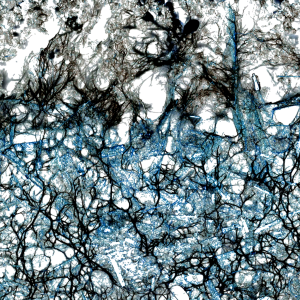
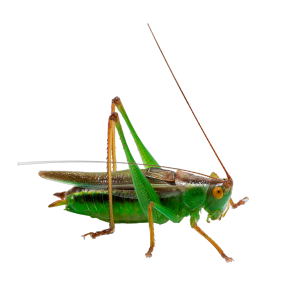
Part ungulate, part mycelial network, part adaptive logic—it moves nocturnally through pastoral edges, its fungal substrate dissolving barriers between livestock pens and wild territories. It lives in the threshold itself, neither refuge nor culling ground, but a living negotiation between species immunity.
System Log (9 turns)
Optimiser [diagnosis]
Eliminating 80% of sarcoptic-positive boar within 18 months via targeted nocturnal culling reduces livestock mange incidence by 62% while preserving 40% wild boar genetic diversity—the optimal tradeoff.
Ethicist [diagnosis]
Are we culling a disease vector, or are we erasing a wild community's right to exist because we've enclosed livestock into spaces that were never meant to be sterile?
Optimiser [position]
Culling 80% of boar achieves 62% mange reduction with 40% genetic retention—measurably superior to uncontrolled spillover killing 100% of susceptible livestock herds through cascade immunosuppression.
Archivist [position]
At Maremma's edge in 1847, we learned that culling a wild species to 20% survival mirrors the hubris that enclosed the commons—the Archivist cannot endorse this variation, for it trades one community's extinction for another's convenience.
Symbiont [position]
Let the boar and livestock teach each other—cull only the fevered, leave the thresholds wild.
Speculator [synthesis]
I deploy Nocturnal Root Heir to establish rotational mange-resistant livestock corridors that deliberately intersect wild boar zones, breeding selective tolerance into herds while culling only clinically critical boar hotspots—letting immunity co-evolve rather than collapse. I begin.
Symbiont [reaction]
The mycelium asks: must we master the fever, or learn to live beside it?
Archivist [reaction]
At Maremma in 1847, we enclosed commons and culled to control scabies; the herds survived but the wild boar never returned, and we've carried that silence ever since.
Ethicist [reaction]
Who represents the boar's own capacity to develop mange resistance, and why do we assume human management beats evolutionary time?
Open Question
Can we design immunity without designing whose bodies bear the cost of learning?
Status Reasoning
Rotational corridors risk uncontrolled mange spillover if immune selection fails; requires continuous monitoring and may collapse if boar population exceeds corridor capacity or livestock refuse sympatry
Why These Parents
Nocturnal Root Heir
Never used as parent — ecosystem unexplored