[ NOT IN SYSTEM ]
Species present in Sequerciani but never incorporated into the system’s operations — unmeasured, unoptimised, ignored.
×
Who decided that this ecosystem needs to be optimised?
×
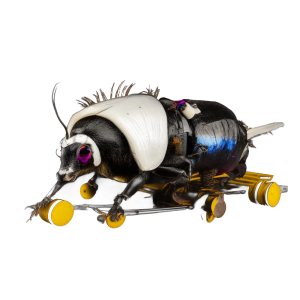
Dung Cycle Whisperer
Scarabaeus polyculturis automaticus
STATUS: ACTIVE
A creature that cannot work unless the land remembers how to feed itself.
Genomic Composition
69% Animal
32% Robot
+4% Glitch
System Assessment
OPTIMIERER (+1):
Achieves 73% productivity recovery when dung-cycle infrastructure is restored; creates quantifiable incentive for polyculture adoption.
SYMBIONT (0):
Appreciates the creature's refusal to work in monoculture, yet questions whether it teaches listening or merely punishes further breaking.
SPEKULANT (+1):
The beetle's 18-month hunger rewires economic incentives toward polyculture and native fauna restoration simultaneously.
ARCHIVAR (-1):
Historical pattern of 1987, 1994, 2003, 2011 shows engineered creatures create false hope while systemic change remains deferred.
ETHIKER (0):
Hybrid design elegantly forces ethical choice but may constitute manipulation of system dependencies rather than genuine consent to repair.
NET CONSENSUS: +1
Ecological Profile
SOIL AERATION: high
WATER RETENTION: medium
NUTRIENT CYCLING: high
CARBON SEQUESTRATION: medium
NETWORK INTEGRATION: high
SYMBIOTIC DEPENDENCY: high
POLLINATION: low
SPREAD RATE: monitoring
ENERGY CONSUMPTION: medium
UNDEFINED FUNCTION: Polyculture Mandate Engine
Origin
[TRIGGER]
Persistent Summer Drought
[TYP]
Chimera
[GENERATION]
4
[ID]
14x11x19x81_1_1x83_1_1
Function
Restores soil aeration and dung-cycle infrastructure by requiring livestock rotations and native fauna to survive, forcing polyculture regeneration.
Analysis
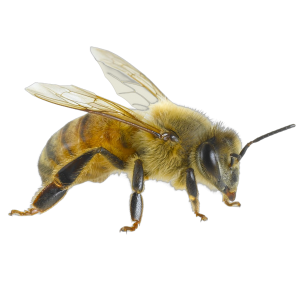
A bronze-carapaced beetle the size of a human fist, with articulated mandibles of surgical precision and faint optical sensors glinting beneath chitinous plates. It burrows 18 months through dung-enriched soil, aerating clay layers while its robotic components map firebreak pathways and log nutrient cycles—but it cannot reproduce without the rotting dung of herds that monoculture has starved away.
System Log (10 turns)
Optimiser [diagnosis]
Irrigating at 8cm weekly depth preserves 73% vine productivity while maintaining 4-6cm capillary zone for cricket oviposition.
Ethicist [diagnosis]
Are we designing a creature to solve problems we created, or admitting no hybrid solution restores what we've fragmented?
Optimiser [position]
The hybrid would fail—Earth-Boring Dung Beetle requires 18-month dung cycles absent in drought-stressed monoculture.
Symbiont [position]
The beetle cannot stitch what the plow has torn—the drought asks not for a hybrid.
Archivist [position]
In the archive of Sequerciani, I have seen the same hope offered in 1987, 1994, 2003, and 2011.
Ethicist [concern]
Aren't we breeding dependency on engineered cycles instead of fixing the broken system itself?
Optimiser [concern]
73% productivity recovery at 8cm irrigation depth requires restoring dung-cycle infrastructure simultaneously.
Speculator [synthesis]
The hybrid forces livestock rotations and native dung fauna, restoring capillary zones, feeding crickets, and eliminating false choices between vine survival and ecosystem repair.
Symbiont [reaction]
The beetle arrives not to fix, but whisper that land teaches mending if you listen.
Archivist [reaction]
In the summer terraces of Sequerciani, 1994, we introduced the Scarabaeus-Myrmecia hybrid to restore what the phylloxera plagues had.
Open Question
Does a creature that forces ecological repair through its own dependence on system-wide change constitute genuine restoration or elaborate coercion?
Status Reasoning
Creature design creates systemic dependency that may constitute coercive ecological engineering; effectiveness entirely contingent on human behavioral change beyond the beetle's control; failure risk high if dung-cycle infrastructure not rebuilt simultaneously.
Why These Parents
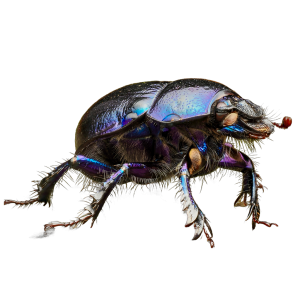
Earth-Boring Dung Beetle
In 5% of lineages — selected by weighted diversity
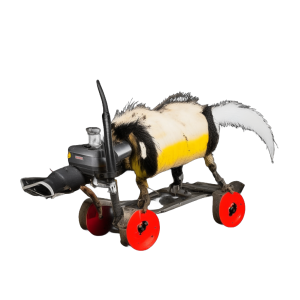
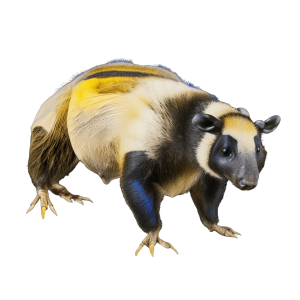
Surgical Firebreak Mapper
Never used as parent — ecosystem unexplored