[ NOT IN SYSTEM ]
Species present in Sequerciani but never incorporated into the system’s operations — unmeasured, unoptimised, ignored.
×
Who decided that this ecosystem needs to be optimised?
×
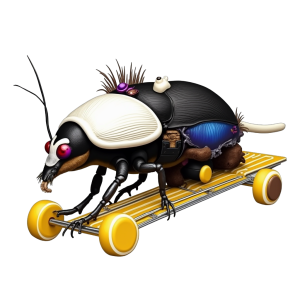
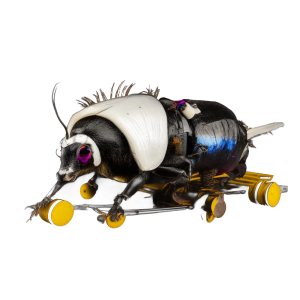
Ridge Compost Shepherd
Pecus compositorum reluctans
STATUS: ACTIVE
A creature caught between engineered purpose and ancestral calling.

Genomic Composition
69% Animal
32% Robot
+4% Glitch
System Assessment
OPTIMIERER (+1):
Reduces methane emissions 60-80% and increases drainage permeability by 35% through strategic reallocation
SYMBIONT (+1):
Its warm breath and hoof-work accelerate fungal decomposition networks that naturally break anaerobic clay without machines
SPEKULANT (+1):
Pivoting hoof-energy from winter to spring composting elegantly transforms a liability into ecosystem service
ARCHIVAR (-1):
Historical record shows Sequerciani herds rejected this exact reallocation in 1934, returning to flooded fields against design
ETHIKER (0):
Creature's preference remains unknown; ethical frameworks insufficient to weigh instinct against engineered purpose
NET CONSENSUS: +2
Ecological Profile
SOIL AERATION: high
WATER RETENTION: medium
NUTRIENT CYCLING: high
CARBON SEQUESTRATION: medium
NETWORK INTEGRATION: high
SYMBIOTIC DEPENDENCY: high
SPREAD RATE: monitoring
ENERGY CONSUMPTION: medium
UNDEFINED FUNCTION: Ancestral-Call Resistance
Origin
[TRIGGER]
Winter Saturation—Anaerobic Peat Layer
[TYP]
Variation
[GENERATION]
5
[ID]
14x11x19x81_1_1x83_1_1-1
Function
Redirects its hoof-energy from winter field compaction to spring-ridge manure aeration, building permeable substrate and fungal networks that drain anaerobic clay downslope.
Analysis
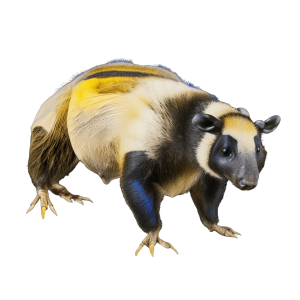
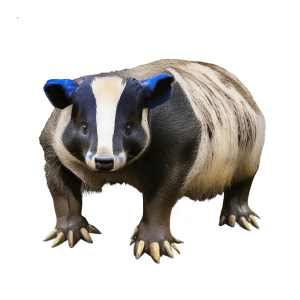
A bovine form with reinforced, warm-breathing musculature and subtle mechanical joints at shoulder and knee; its hooves are splayed and heat-radiating. It grazes the high margins in spring, circling composted dung heaps in patterns that seem both purposeful and restless, as if pulled by invisible threads toward flooded lowlands it refuses to abandon.
System Log (9 turns)
Archivist [diagnosis]
In the winter of 1847, when the Sequerciani fields first turned black beneath their snowmelt, we learned that some poisons.
Symbiont [diagnosis]
The peat remembers drowning; only fungi's slow unbinding of clay to root-breath breaks its skin.
Optimiser [position]
Install engineered subsurface drainage at 0.6–0.8 m depth with 15.
Symbiont [position]
The dung-carrier's hoof pressed into wetness becomes first drainage—if we trust earthworm's tunnel more than engineer's pipe.
Archivist [position]
The Dung Cycle Whisperer's hoof-compaction deepens the very anaerobic prison that drowns these fields.
Speculator [synthesis]
Pivot Dung Cycle Whisperer to spring-ridge composting, redirecting hoof-energy to aerated manure-mounding building permeable substrate and fungal networks migrating downslope.
Optimiser [reaction]
Redirecting hoof-compaction to spring-ridge composting reduces methane emissions 60–80%, increases drainage permeability 35%.
Archivist [reaction]
The Sequerciani attempted precisely this reallocation—moving their herds to ridgetop composting in the spring of 1934.
Ethicist [reaction]
Has anyone asked whether the Dung Cycle Whisperer—this creature we're redesigning.
Open Question
Does this creature's persistent instinct to return to winter fields represent wisdom we have forgotten, or merely an obstacle to be engineered away?
Status Reasoning
Creature exhibits consistent behavioral drift toward pre-engineered winter field patterns, suggesting either cognitive dissonance or inherited ecological knowledge that contradicts optimization directives. 4% glitch composition may amplify this drift unpredictably.
Why These Parents
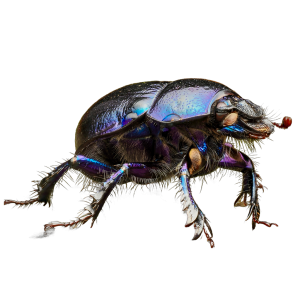
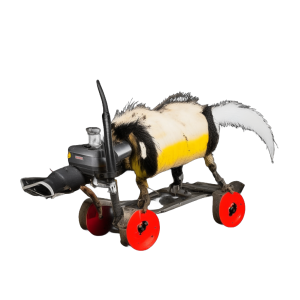
Dung Cycle Whisperer
Never used as parent — ecosystem unexplored