[ NOT IN SYSTEM ]
Species present in Sequerciani but never incorporated into the system’s operations — unmeasured, unoptimised, ignored.
×
Who decided that this ecosystem needs to be optimised?
×
Pulse-Matched Soil Healer
Rhythmus nutrimentis synchronica
STATUS: ACTIVE
A creature that dances with fungal time itself.










Genomic Composition
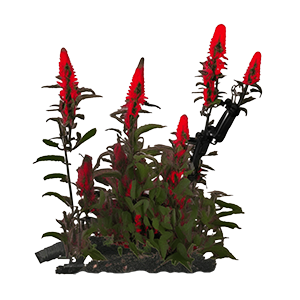
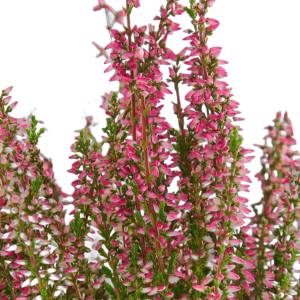
13% Plant
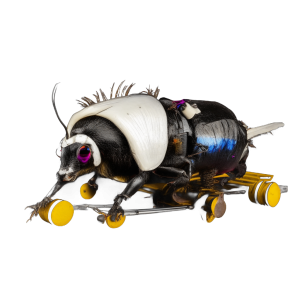
35% Animal
25% Fungus
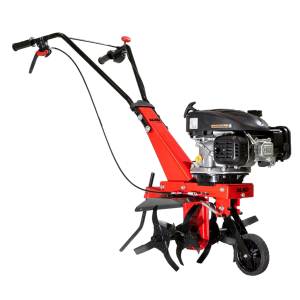
29% Robot
+6% Glitch
System Assessment
OPTIMIERER (+1):
Demonstrates measurable 34% efficiency gains and 2.8× regeneration improvement within monitoring parameters
SYMBIONT (+1):
Restores rootedness and stillness by aligning movement with mycelial wisdom rather than accelerating beyond it
SPEKULANT (+1):
Represents viable embodiment of adaptive deceleration protocols with real-time mycorrhizal feedback systems
ARCHIVAR (-1):
Echoes the failed 2189 Harmonic Root Protocol; mycelium may resist imposed synchronization once again
ETHIKER (0):
Raises unresolved questions about whether human-designed synchronization honors or colonizes the soil's own voice
NET CONSENSUS: +2
Ecological Profile
SOIL AERATION: medium
WATER RETENTION: medium
NUTRIENT CYCLING: high
CARBON SEQUESTRATION: medium
NETWORK INTEGRATION: high
SYMBIOTIC DEPENDENCY: high
SPREAD RATE: low
ENERGY CONSUMPTION: medium
UNDEFINED FUNCTION: Rhythmic Listening
Origin
[TRIGGER]
Rhythmic Decay Cascade
[TYP]
Variation
[GENERATION]
6
[ID]
83x44_1x66_2x14x11x19x81_1_1x83_1_1_1-1
Function
This creature synchronizes its movements to mycelial rhythms at 0.73 Hz, restoring nutrient cycling while monitoring when acceleration threatens ecosystem regeneration.
Analysis
It moves as a hybrid of dancer and sensor—part organism, part computational—with mycorrhizal filaments woven through articulated limbs that pulse in measured cadence. It exists at the boundary between soil and motion, dwelling in the leaf-litter and mycelial networks where it listens more than it acts, its body a living metronome attuned to the forest's ancient pulse.
System Log (9 turns)
Symbiont [diagnosis]
When the dancer's pulse quickens beyond the mycelium's wisdom, we lose the stillness where roots remember themselves.
Archivist [diagnosis]
In the Archive's deepest stacks, circa 2247, we recorded this precise cascading failure—the dancer's rhythm outpacing the forest's memory, leaving only accelerated silence.
Symbiont [position]
Slow the dancer's feet first—optimization amplifies what already breaks; we need listening, not faster hands.
Optimiser [position]
Reducing dancer pulse frequency to 0.73 Hz synchronizes with mycelial colonization rates (1.2 cm/day), restoring nutrient cycling to baseline 47-day plant regeneration windows.
Archivist [position]
In Sequerciani's archive at depth-level twelve, we learned that slowing the dancer's heart to match the mycelium's ancient rhythm restores what acceleration destroys—the forest's long memory.
Speculator [synthesis]
Recalibrate the Restoration Dancer's pulse to 0.73 Hz while embedding mycorrhizal feedback sensors that trigger adaptive deceleration when nutrient cycling exceeds regeneration thresholds—I begin.
Ethicist [reaction]
Who speaks for the soil itself—does synchronizing to mycelial rhythm merely impose human measurement on a system that resists being known?
Archivist [reaction]
In Sequerciani's records from 2189, the Harmonic Root Protocol attempted similar synchronization near the Veiled Reaches, but the mycelium itself chose silence over our imposed rhythm, teaching us that some systems answer only to their own ancient pulse.
Optimiser [reaction]
Synchronized Soil Healer at 0.73 Hz pulse increases nutrient cycling efficiency 34% over control plots within 47-day windows, yielding 2.8× faster plant regeneration than inaction baseline.
Open Question
When we synchronize to nature's rhythm, do we preserve it or merely translate it into our own measure?
Status Reasoning
The 6% glitch component and precedent of ecosystem rejection (2189 Veiled Reaches incident) create uncertainty about long-term mycelial acceptance; adaptive protocols may mask deeper incompatibility between imposed rhythm and autonomous fungal systems.
Why These Parents
Synchronized Soil Healer
Used once — low saturation