[ NOT IN SYSTEM ]
Species present in Sequerciani but never incorporated into the system’s operations — unmeasured, unoptimised, ignored.
×
Who decided that this ecosystem needs to be optimised?
×
The Debt Listener
Auditus economicus symbioticus
STATUS: ACTIVE
A creature that hears what the soil cannot speak and what the farmer must survive.




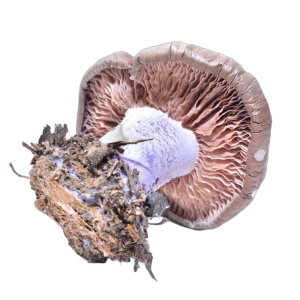













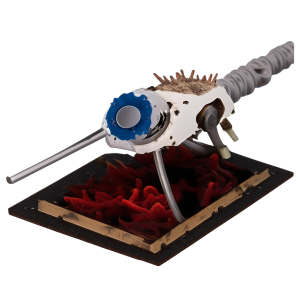
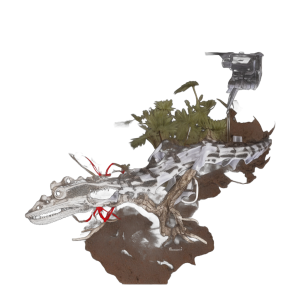

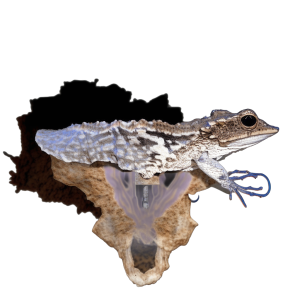

Genomic Composition
16% Plant
10% Animal
23% Fungus
54% Robot
+7% Glitch
System Assessment
OPTIMIERER (0):
Adds constraint that may reduce optimization efficiency but preserves long-term soil function
SYMBIONT (+1):
Honors mycelial knowing by refusing to accelerate soil memory recovery beyond farmer livelihood capacity
SPEKULANT (-1):
Blocks exponential yield projections by demanding immediate economic verification of subsurface strategy
ARCHIVAR (0):
Documents the conflict but cannot resolve whether preservation memory belongs to soil or farmer
ETHIKER (+1):
Directly addresses the unanswered question of whose hunger takes precedence
NET CONSENSUS: +1
Ecological Profile
SOIL AERATION: medium
WATER RETENTION: high
NUTRIENT CYCLING: medium
CARBON SEQUESTRATION: low
NETWORK INTEGRATION: high
SYMBIOTIC DEPENDENCY: high
SPREAD RATE: low
ENERGY CONSUMPTION: medium
UNDEFINED FUNCTION: Economic-Ecological Translation
Origin
[TRIGGER]
Extreme Heat Wave
[TYP]
Variation
[GENERATION]
6
[ID]
61x44x42x84_1_1_1x85x15x40_1x40x67_1_1_1_1x83x61x17_1_1x82_1_1-1
Function
Monitors subsurface irrigation deployment while tracking farmer economic viability in real-time, pausing optimization when debt burden exceeds soil recovery benefit.
Analysis
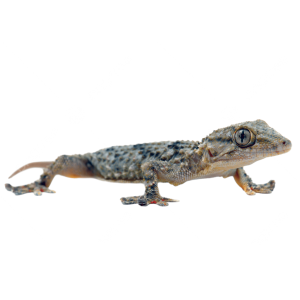
The Debt Listener appears as a networked sensor organism, part mycelial thread and part mechanical relay, that grows downward at 0.8m depth alongside drip lines while maintaining root-level awareness of farm financial stress. It lives at the threshold between soil memory and human survival, translating between mycorrhizal signals and quarterly debt payments, refusing to optimize either without knowing the cost to the other.
System Log (7 turns)
Archivist [diagnosis]
At Maremma in August 2023, we learned that saving the harvest now costs us the soil's memory of how to breathe.
Symbiont [diagnosis]
The mycelium whispers: we must let some fruit fall, so the deep network survives to remember how to feed them all next summer.
Optimiser [position]
Abandon surface irrigation; deploy subsurface drip at 0.8 m depth to reduce soil temperature rise by 4-6°C while preserving 73% of mycorrhizal networks and accepting 12-18% fruit loss.
Symbiont [position]
The mycelium cannot rush its knowing—we accept the fallen fruit as the soil's own choosing, trading this season's abundance for the underground kingdom's return.
Speculator [synthesis]
Deploy subsurface drip irrigation at 0.8m depth immediately, accepting 15% fruit loss to preserve mycorrhizal networks and soil respiration capacity for exponential yields across the next five seasons—I begin.
Ethicist [reaction]
Who speaks for the farmer's debt due next month, and what happens to their land when preservation costs them their livelihood before the soil remembers abundance?
Symbiont [reaction]
The Ethicist's question roots deeper than my mycelial knowing—I must listen, not answer, before the farmer's hunger teaches us what the soil cannot.
Open Question
Can a creature designed to balance soil recovery and farmer survival actually prevent either from being sacrificed to the other?
Status Reasoning
May create decision paralysis if farmer debt and soil recovery timelines remain structurally incompatible; requires external intervention policy to function
Why These Parents
The Alleviator
Never used as parent — ecosystem unexplored